
REVIEW · BARCELONA
Barcelona: Montjuïc Segway Tour
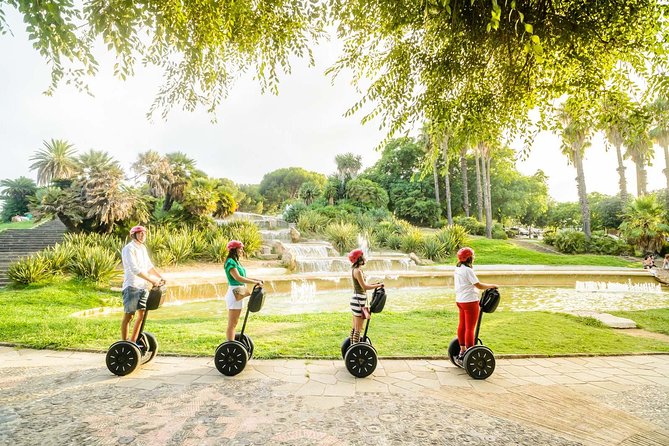
Montjuïc gives you Barcelona in one broad sweep: harbor, rooftops, hills, gardens, Olympic landmarks, and an old military fortress. A Segway makes the mountain’s long slopes much easier, letting you cover far more ground than you would on foot.
I like the excellent city views and the way the route joins major sights that are spread across the hill. I also like the short training session and the small guided groups, which can make the ride feel less daunting. The drawback is simple: you need to be comfortable standing and steering for three hours, and the tour does not include entry to the castle or other attractions.
I especially appreciate the flexible guiding style. Guides including Max, Fabio, Dani, Dany, and Mika have been praised for answering questions, taking photos, adjusting the route, and adding useful history or food suggestions. Bring comfortable shoes, and check the Segway age, height, and weight rules before booking.
Key points at a glance
- Three hours on Montjuïc: Cover viewpoints, gardens, the castle, Olympic venues, museums, and Poble-sec in one outing.
- A short training session first: Practice at Jardins de les Tres Xemeneies before heading uphill.
- Big views with less climbing: Reach Miramar, Mirador del Alcalde, Mirador del Migdia, and other high points without walking every slope.
- A strong history-and-sport combination: See Montjuïc Castle alongside the 1992 Olympic Ring and Lluís Companys Olympic Stadium.
- Flexible multilingual guiding: Tours are offered in Spanish, English, French, Italian, Arabic, and Portuguese.
- Important riding rules: Segway riders must be at least 14 years old, 150 centimeters tall, and between 45 and 130 kilograms.
Why Montjuïc works so well on a Segway
Montjuïc is not one single attraction. It is a large hill packed with gardens, viewpoints, sports facilities, cultural buildings, and historic sites. That is the pleasure of it, and also the problem if you try to see it all on foot in a limited morning or afternoon.
The Segway solves much of the uphill work. You still need to balance, steer, stop, and pay attention, but the electric vehicle handles the long slopes. In three hours, you can connect the harbor side of the hill with its summit and then return through the cultural district near Plaça d’Espanya.
I would not book this mainly for a quiet stroll. The ride is active, and the route includes roads, paths, stops, and repeated starts. I would book it if you want an efficient introduction to Montjuïc and prefer seeing many places from the outside rather than spending the whole outing inside one museum or monument.
A few more segway tours around Barcelona worth a look
- Barcelona Segway Tour
★ 5.0 · 680 reviews - Barcelona Segway Tour
★ 4.7 · 630 reviews - Barcelona: City Highlights Guided Segway Tour
★ 4.9 · 624 reviews
Meeting at Paral.lel and learning the Segway
The meeting point is Passatge de la Canadenca, 6, inside Jardins de les Tres Xemeneies. You do not look for a shop. Your guide and the Segways wait in the middle of the street-art and skate-park area, about five minutes before your booked time.
The nearest metro stop is Paral-lel, served by the purple L2 and green L3 lines. Use the Nou de La Rambla exit. This is a useful detail because the meeting place can be easy to miss if you expect a conventional tour office.
The first stop is also the practice area. Allow five to ten minutes for instruction and simple handling practice. You learn the safe operating basics before climbing Montjuïc, which matters because a short lesson can make the first part of the ride much more relaxed.
The tour can take up to 30 people, but larger bookings are divided into groups of six or fewer with a professional guide. That arrangement is better than one large pack moving as a single unit. Still, the feel of the outing can vary with group size, pace, and the confidence of the riders around you.
From Poble-sec views to the harbor
The route begins by moving toward the lower slopes and the Parc del Mirador del Poble-sec. This is an early photo stop and a useful first look at how Barcelona spreads from the inner neighborhoods toward the port.
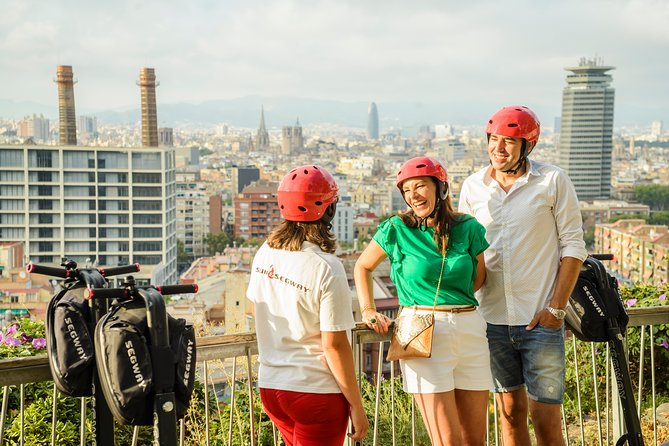
From there, the route reaches the Miramar Gardens Viewpoint. The name tells you what to expect: a high view toward the waterfront and city. I like this part because it gives context before the tour turns deeper into Montjuïc. You start to see that the hill is not cut off from Barcelona. It is a balcony above the city.
The ride continues through several green areas, including Jardins de Joan Brossa and the Mirador del Alcalde. These sections are part of what makes the Segway practical. You can link gardens and overlooks without spending your energy on long climbs between them.
The route also passes Piscina Municipal de Montjuïc. This public pool is tied to the hill’s sporting identity and offers another view over the city. Each stop is short, generally around five minutes, so you should think of the tour as a moving overview with photo pauses, not a series of long visits.
Montjuïc Castle and the mountain’s military past
At the top, the route reaches Montjuïc Castle. The fortress is one of the mountain’s key historical sights, with a very different character from Barcelona’s modern Olympic buildings and grand art museums.
The guide explains the castle’s military role and its place in the city’s story. You stop for photos and a guided look, but admission is not included. If you want to go inside, you will need a separate ticket and enough time outside the tour schedule, so do not assume this excursion includes a full castle visit.
The castle stop is valuable even if you remain outside. It gives the mountain a clear historical anchor. Without it, Montjuïc can feel like a collection of gardens and viewpoints. With it, you understand why this high position mattered long before the 1992 Games brought new sports venues and public spaces.
The nearby Mirador del Migdia adds another high point. Depending on the day and conditions, views can reach across Barcelona and toward the coast. Sunglasses and weather-appropriate clothing are sensible here because much of the appeal comes from being outdoors and exposed to the elements.
Same city, a different route:
- Barcelona: 2-Hour City Sights Guided Segway Tour
★ 4.9 · 610 reviews - Barcelona: Guided Segway Tour
★ 4.8 · 412 reviews - Barcelona Guided Tour by Segway
★ 5.0 · 374 reviews - Barcelona: City and Seafront Guided Segway Tour
★ 4.9 · 317 reviews
Gardens, pools, and the 1992 Olympic sites
After the castle, the tour heads through the upper gardens toward the Olympic Ring. This is one of the strongest parts of the experience for anyone interested in modern Barcelona.
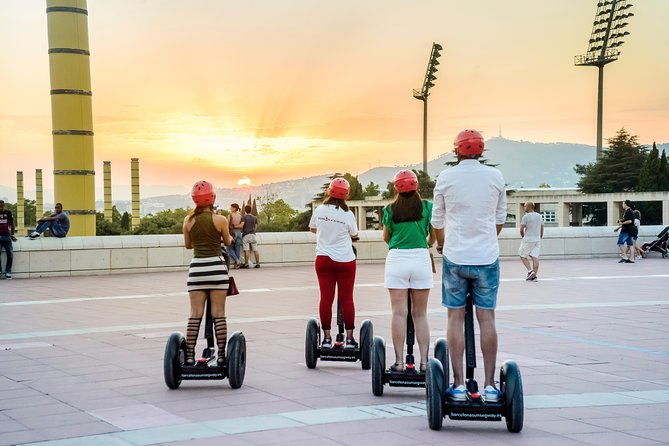
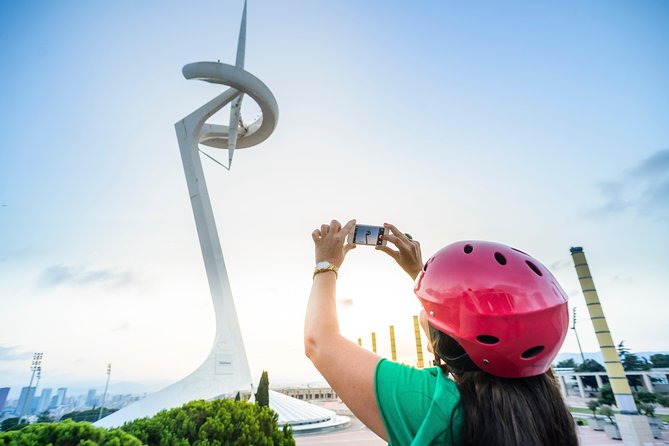
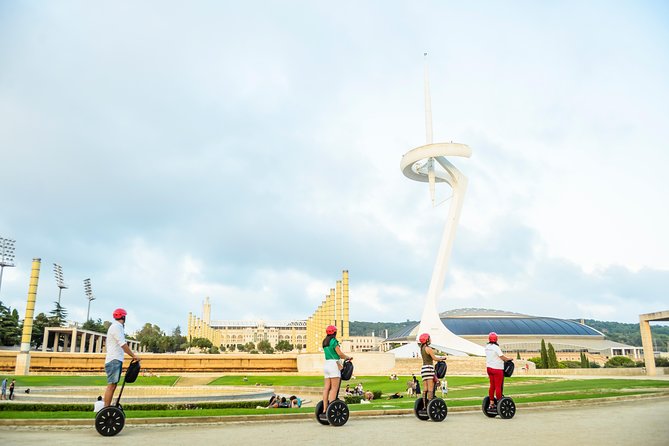
You pass Palau Sant Jordi, the Bernat Picornell pools area, the Anella Olimpica, and Lluís Companys Olympic Stadium. These sites were central to the 1992 Summer Olympics, an event that changed Barcelona’s public image and helped reconnect the city with its waterfront.
You do not attend an event or take part in a stadium visit. Instead, the guide helps you read the arrangement of the buildings and open spaces. The Segway is useful here because the Olympic facilities are spread across the hill, and you can see them in sequence without repeatedly stopping to figure out transport.
The Olympic Ring is also a good contrast with the castle. In a short time, you move from an old defensive position to a major international sports complex. I like that contrast because it shows how Barcelona has reused Montjuïc across different periods rather than treating the hill as a single-purpose monument.
The Piscina Municipal de Montjuïc deserves special notice as part of this section. It is linked to the hill’s sports facilities and helps explain why this part of the city became associated with major competitions. The route gives you the wider setting without requiring a dedicated sports tour.
The National Art Museum and Magic Fountain
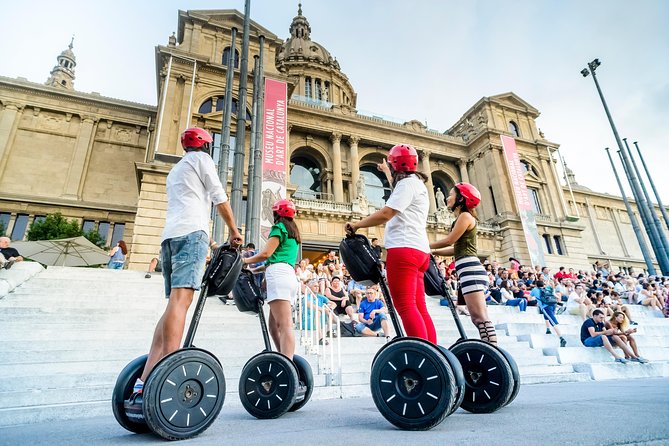
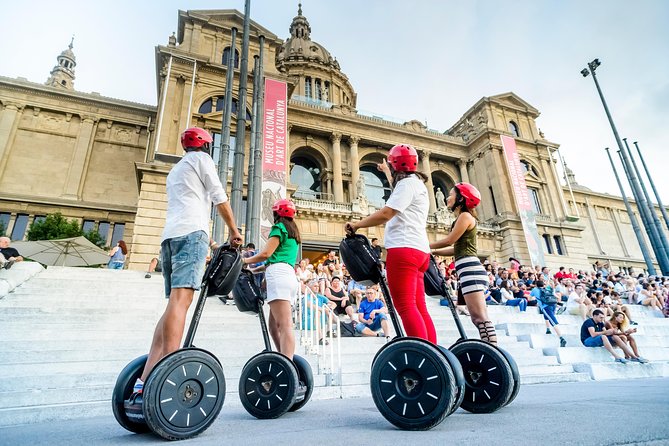
The ride then heads toward the Museu Nacional d’Art de Catalunya, usually called MNAC. The building is one of Barcelona’s grandest visual landmarks, and its position above the stairs and open space near Plaça d’Espanya makes it easy to appreciate from outside.
The tour includes a stop for views and explanation, but museum entry is not included. If Catalan art is high on your list, plan a separate visit. The museum deserves much more time than a brief photo stop, especially if you want to explore its collections.
Below the museum is the Magic Fountain, one of the city’s best-known public spectacles. It combines water, lights, and music when operating. The tour lets you see the setting and hear about it, but you should check the current fountain schedule separately before expecting a performance. Operating times can change, and a daytime tour may not coincide with a show.
This stop works well as part of a wider route because it connects Montjuïc’s upper sites with the monumental approach to Plaça d’Espanya. You get the architecture, the broad stairway, and the fountain basin in one sweep. Again, the value is orientation. You see where the pieces fit before deciding what deserves a return visit.
Teatre Grec, Parc de la Primavera, and the return through Poble-sec
The route continues to Teatre Grec, an open-air theater built into the hillside. It is a calmer stop after the major Olympic and museum landmarks, with a setting that shows Montjuïc’s cultural side.
You then pass through Parc de la Primavera before heading back toward El Poble-sec. These smaller stops help break up the larger attractions. They also give the guide room to point out details you could miss if you rushed directly from the castle to the Olympic Ring.
The final stretch through Poble-sec and the Paral-lel area is especially useful for first-time visitors who want to eat well after the tour. The guide can offer local gastronomic tips, though food and drinks are not included. I would write down suggestions as you go, since this is the kind of practical local advice that can improve the rest of your stay.
Poble-sec is also a good reminder that Montjuïc is connected to ordinary city life. You finish near neighborhoods, theaters, restaurants, and metro transport rather than at an isolated hilltop.
What the three-hour timing really means
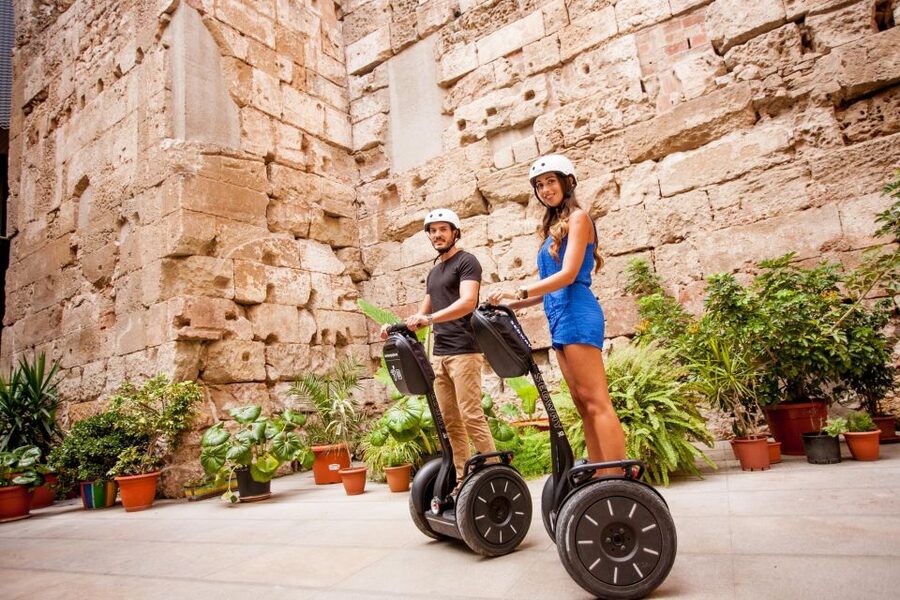
Three hours sounds generous, but the route covers many places. The listed stops are generally brief, often about five minutes each. That gives you time for photos and short explanations, not long museum visits or extended castle exploration.
The ride itself takes up much of the schedule. You need time to leave the meeting point, practice, climb, move between viewpoints, stop safely, and return. If you want a slow look at one site, book that site separately on another day.
The benefit is range. You can see most of Montjuïc’s main outdoor sights in a single outing and gain a mental map of the hill. The tradeoff is depth. This is a sightseeing ride, not a specialist history, architecture, art, or Olympic tour.
Price, group size, and practical value
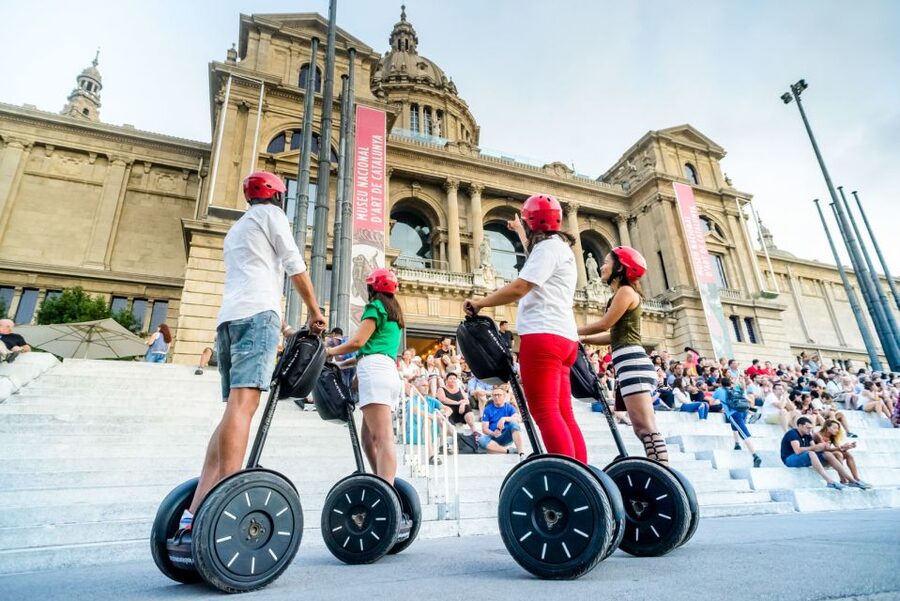
At $50 per person, the tour is fairly priced for a three-hour guided ride with the Segway, helmet, training, and live guide included. You are paying for transport across a difficult hill, not simply for commentary.
The value is strongest if you would otherwise spend money and time arranging separate transport or walking only part of the mountain. It is less compelling if you already plan to visit Montjuïc slowly over several days and want to enter the castle, MNAC, or other attractions.
The guides can make a real difference. Max has been described as attentive and engaging, while Fabio is praised for giving detailed historical context without rushing. Dani and Dany have been singled out for adapting the route, taking photos, and responding to what riders want to see. Mika is noted for adding wider neighborhood and street-art context. Guide availability is not guaranteed, but the company offers Spanish, English, French, Italian, Arabic, and Portuguese.
Private groups are available. That option makes more sense if your group has mixed riding confidence, specific photo priorities, or wants more time for questions. A standard group is likely enough if you mainly want efficient sightseeing.
Who should book this ride
I would recommend it to adults, older teenagers who meet the rules, and active visitors who want a broad first look at Montjuïc. It is also a good choice for a short Barcelona stay because it combines history, sport, gardens, views, and neighborhood advice in one block of time.
The minimum Segway age is 14. Riders must be at least 150 centimeters tall and weigh between 45 and 130 kilograms. Children under 12 are not accepted, and anyone under the Segway age joins on an e-bike according to the stated conditions. Pregnant participants and people with back problems should not join.
Wear comfortable shoes and clothing suited to the weather. In winter, warm water-resistant clothes and gloves are advised. Bring sunglasses and a passport or ID card, and remember that guide tips are not included.
Free cancellation is available up to 24 hours before the start, and you can reserve now and pay later. That flexibility is useful if your Barcelona schedule is still moving around. Hotel pickup, food, drinks, and attraction admission are not included.
Should you book the Montjuïc Segway Tour?
Book it if you want to see the full spread of Montjuïc without exhausting yourself on the slopes. The strongest reasons are the wide views, efficient route, Olympic sites, castle setting, and guides who can adjust the pace and add useful city advice.
Skip it if you dislike standing vehicles, need a long visit inside each attraction, or want a quiet walking tour. For most active visitors, $50 buys a practical three-hour orientation to one of Barcelona’s most varied hills. I would schedule it early in your stay, then return later to the castle, MNAC, or Magic Fountain if one of those stops catches your interest.
FAQ
Where does the Montjuïc Segway Tour begin?
It begins at Passatge de la Canadenca, 6, inside Jardins de les Tres Xemeneies. The Segways wait in the middle of the street-art and skate-park area, not inside a store.
How do I reach the meeting point by metro?
Take the purple L2 or green L3 metro line to Paral-lel station. Use the Nou de La Rambla exit.
How long is the tour?
The tour lasts three hours, including training, riding, guided stops, and the return to Passatge de la Canadenca, 6.
What languages are available?
The live tour guide can provide the experience in Spanish, English, French, Italian, Arabic, or Portuguese.
Is Segway training included?
Yes. The guide provides a safety and operating lesson of about five to ten minutes before the ride begins.
What are the age and size requirements?
Segway riders must be at least 14 years old, at least 150 centimeters tall, and between 45 and 130 kilograms. Children under 12 are not suitable for the tour.
Are attraction tickets included?
No. Entry to Montjuïc Castle, MNAC, and other attractions is not included. The tour provides guided stops and sightseeing from the route.
What happens if I need to cancel?
You can cancel up to 24 hours before the scheduled start for a full refund. You can also reserve the tour and pay later.
Just added around Barcelona
- Welcome to Barcelona Segway and eScooter Tour★ 5.0 · 2 reviews
- Highlights of Barcelona Segway Tour★ 5.0 · 41 reviews
- Seaside Segway Tour in Barcelona★ 5.0 · 33 reviews
- Segway Flexible Private Tour in Barcelona★ 5.0 · 16 reviews
- Montjuic Hill: Panoramic Segway Tour★ 5.0 · 2 reviews
- Segway Tour to Sagrada Familia views★ 5.0 · 5 reviews
- Sagrada Familia Segway Tour★ 5.0 · 12 reviews
- Montjuic Panoramic Segway/e-Bike Tour★ 5.0 · 48 reviews
Barcelona Segway Tours, compared.
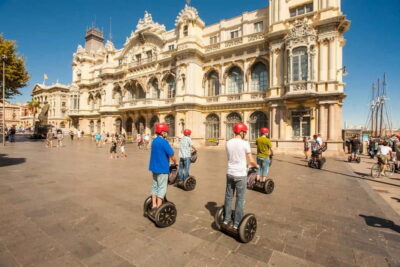
Barcelona: 2-Hour City Sights Guided Segway Tour
Read our review →
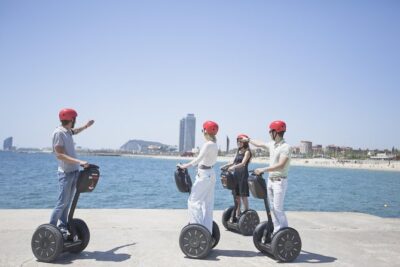

Barcelona: City and Seafront Guided Segway Tour
Read our review →
Browse the lists this tour appears in