
REVIEW · BARCELONA
Exclusive Gaudi Segway Guided Tour Architectural Marvels
Gaudí’s Barcelona is made for a tour that keeps you moving. This Segway ride links Roman walls, the harbor, Olympic waterfront, Sagrada Família, Casa Milà, Casa Batlló, and Parc de la Ciutadella without asking you to cover the full route on foot. I especially like the bike-path access, which helps the group reach more of the city, and the guide’s reported habit of asking what you most want to see. The main drawback is simple: most stops are short photo and explanation breaks, and admission to the major Gaudí buildings is not included.
I also like the mix of Barcelona. You get medieval lanes, seaside promenades, grand boulevards, and Modernisme architecture in one outing. Still, a group of up to 30 people can feel large, and anyone who wants to tour the interiors of Sagrada Família, Casa Milà, or Casa Batlló will need separate tickets and extra time.
Key points before you book
- A broad Barcelona route: The ride connects the Gothic Quarter, Port Vell, Port Olímpic, Eixample, and Ciutadella Park.
- Gaudí from the outside: Sagrada Família, Casa Milà, and Casa Batlló are viewing stops, not interior visits.
- Bike paths help with distance: The route can cover more ground than a walking tour, with less effort between landmarks.
- A guide-led ride: The guide can ask about your interests and shape the emphasis of the outing.
- Two to three hours on a Segway: Expect a moving city tour with brief stops, not a full-day architecture class.
- Weather matters: Poor conditions can lead to a new date or a full refund.
Why a Segway works well in Barcelona
Barcelona spreads its best sights across several districts. The Gothic Quarter sits near the water, the Olympic port lies farther east, and Gaudí’s grandest buildings are up in the Eixample district. A walking tour can handle one or two of these areas well, but covering all of them on foot takes time and energy.
A Segway gives you a practical middle ground. You glide between stops rather than spending much of the tour crossing ordinary streets. The route also uses Barcelona’s bike paths, which can make the ride feel more direct and help the group reach monuments that are too far apart for a compact old-town walk.
You should still think of this as a sightseeing ride, not a test of riding skill. The advertised duration is about two to three hours, and the stops range from five to 20 minutes. That tells you what to expect: short explanations, photographs, and views from outside, followed by another stretch of riding.
The guide is an important part of the experience. One especially useful detail is that the guide asks what interests you most. If Gaudí is your priority, say so early. If you prefer Roman and medieval Barcelona, the opening section gives you more to discuss. No guide names are supplied, but the guide’s flexibility appears to be one of the tour’s strongest features.
A few more segway tours around Barcelona worth a look
- Barcelona: City Highlights Guided Segway Tour
★ 4.9 · 624 reviews - Barcelona: 2-Hour City Sights Guided Segway Tour
★ 4.9 · 610 reviews - Barcelona: Guided Segway Tour
★ 4.8 · 412 reviews
Starting among Roman stones in the Gothic Quarter
The meeting point is on Carrer del Correu Vell, 6, in Ciutat Vella. The first listed stop is Plaça dels Traginers, where a surviving section of Roman wall gives you an immediate reminder that Barcelona is much older than its famous Modernisme buildings.
This is a good opening because the wall is easy to appreciate without a long visit. You can look closely at the ancient stones, consider the city’s Roman beginnings, and then move into the Gothic Quarter’s narrow lanes and medieval buildings. The stop lasts about 15 minutes and has no admission charge.
The nearby Passage Colom adds another layer. This passageway links old architecture with shops and cafés, and its name recalls Christopher Columbus and Barcelona’s maritime connections. It is less about one grand monument than about the feel of the old center, where small streets, historic façades, and modern city life sit close together.
A Segway has both an advantage and a limitation here. It saves time, but narrow streets can make the old quarter feel less natural than it would on foot. You may get a useful orientation, yet you will not have unlimited time to wander down every lane.
Port Vell and the city’s maritime side
The route then moves toward Port Vell, Barcelona’s waterfront harbor. Here you can expect a change in mood: open views, boats, promenades, luxury yachts, and the Maremagnum shopping and dining center. The Christopher Columbus Monument is another major reference point in the area.
Port Vell works well as a connecting section because it shows how Barcelona faces the Mediterranean. It is not only a place for photographs. It also helps you understand the city’s modern public spaces, where former port areas now support walks, restaurants, shops, and leisure.
The Cara de Barcelona sculpture is another short stop, with about five minutes listed. This large public artwork is an easy photo point and a recognizable symbol of the city. Admission is not included, though the route description does not indicate a separate paid entry for the brief stop.
You should not expect detailed time at every waterfront feature. The value here is the range of views and the chance to move through several parts of the harbor without arranging transport yourself.
França Station and Port Olímpic
Estació de França provides a look at a different kind of Barcelona architecture. Built for the 1929 International Exposition, the station uses classical and Mediterranean elements and remains a working transport hub. Even if you are not catching a train, the building gives the route an impressive architectural pause between the old center and the coast.
Port Olímpic then shifts the focus to Barcelona’s Olympic-era redevelopment. Created for the 1992 Summer Olympics, this harbor area includes beaches, promenades, restaurants, bars, nightclubs, and a marina filled with boats and yachts. Its palms and modern buildings offer a clear contrast with the Gothic Quarter.
The stop at Port Olímpic is listed at about five minutes and is free. That is enough for a quick look and a few photographs, but not enough for a beach visit, meal, or extended walk along the shore. If you want to enjoy the port after the tour, note the location and return on your own later.
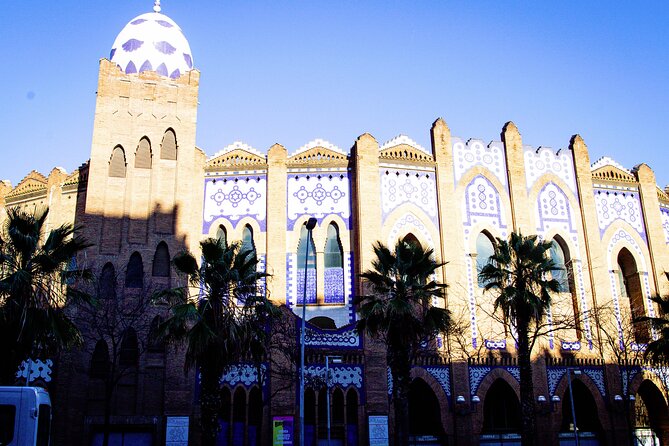
The Plaza de Toros Monumental adds an unusual cultural note. This Moorish Revival bullring once hosted bullfighting, but such events ended there in 2011. Today, the building is used for concerts, exhibitions, and other events. You can appreciate its exterior and think about how Barcelona’s public attitudes have changed, but the tour does not include an interior visit.
Same city, a different route:
- Barcelona Segway Tour
★ 5.0 · 680 reviews - Barcelona Segway Tour
★ 4.7 · 630 reviews - Barcelona Guided Tour by Segway
★ 5.0 · 374 reviews - Barcelona: City and Seafront Guided Segway Tour
★ 4.9 · 317 reviews
Sagrada Família, the essential Gaudí stop
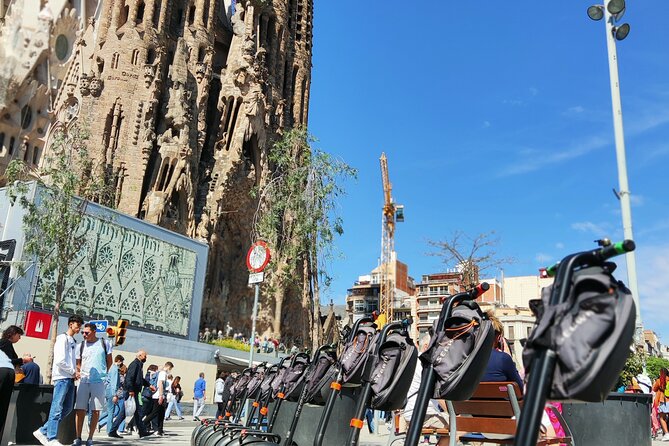
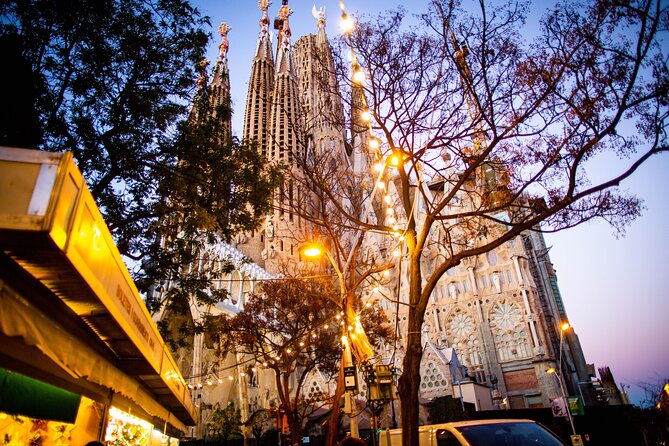
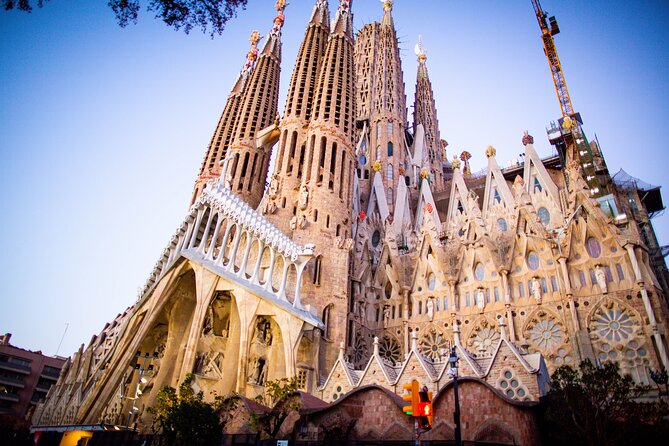
The Sagrada Família is the route’s biggest architectural moment. Gaudí’s basilica is famous for its towering spires, sculpted façades, stained glass, columns, and links to nature, religion, and Catalan identity. Construction continues, and the project is funded by donations and ticket income.
The stop is listed at about 15 minutes, with admission not included. That distinction matters. You will have time to see the exterior, hear context from the guide, and take photographs, but you should not expect to explore the interior or climb a tower during this tour.
I would use this stop to identify what you want to return for. Look at the façades from different angles, notice the contrast between the detailed stonework and the tall vertical forms, and ask the guide about features that catch your eye. Then plan a separate visit if you want the full interior experience.
For many people, the short stop will be the tour’s weakness. Sagrada Família rewards patience, and its interior requires more than a few minutes. For others, the exterior introduction is exactly right, especially if this Segway ride is part of a first-day orientation around Barcelona.
Passeig de Gràcia and Gaudí’s two famous houses
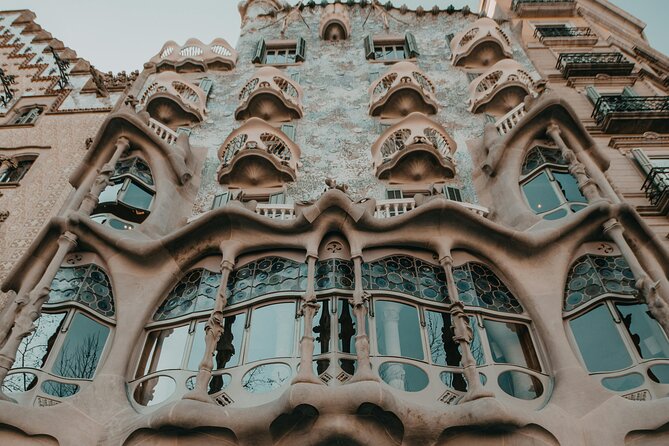
Casa Milà, also called La Pedrera, comes next. Gaudí completed this Modernisme building in 1912, and its rolling stone façade, twisting iron balconies, courtyards, curved rooms, and sculptural rooftop make it one of Barcelona’s most distinctive addresses.
The route allows about five minutes, and admission is not included. That is enough to appreciate the exterior and understand why the building matters. It is not enough for the rooftop, the Espai Gaudí museum, or the interior courtyards. Those require a separate ticket and a longer visit.
Casa Batlló offers an even more playful exterior. Gaudí remodeled it for the Batlló family between 1904 and 1906. Its colorful ceramic surface, bone-like forms, wrought iron, and dragon-inspired roof make it one of the most immediately recognizable buildings on Passeig de Gràcia.
Again, the listed stop is about five minutes without admission. I would treat this as a preview rather than a substitute for entry. Inside, you can see the Noble Floor, loft, and rooftop, but none of those spaces form part of this short roadside stop.
The two buildings work particularly well together. Casa Milà feels heavy, undulating, and sculptural, while Casa Batlló feels colorful, fluid, and almost mythical. Seeing both in a single ride lets you compare Gaudí’s changing ideas without spending the whole day in museums.
Passeig de Sant Joan, the Arc de Triomf, and Ciutadella Park
Passeig de Sant Joan gives the group a calmer stretch. This tree-lined boulevard runs from the Arc de Triomf toward Gràcia and includes cafés, shops, boutiques, green areas, and pedestrian sections. It is a useful reminder that Barcelona is not only about headline monuments.
The Arc de Triomf was built as the main entrance to the 1888 Barcelona World Fair. Its red-brick design and decorative sculptures give it a more welcoming, festive character than many triumphal arches. The listed stop lasts around five minutes and does not include admission.
From there, the ride reaches Parc de la Ciutadella. The park occupies the site of an old military fortress and was converted into a public park for the 1888 World Fair. It contains gardens, walking paths, a lake, sculptures, the Cascada fountain, the Catalan Parliament, and the Barcelona Zoo.
This is the longest stop, at about 20 minutes, and it gives you a chance to slow down. The Cascada is especially worth noting because the young Antoni Gaudí helped Josep Fontserè with the fountain’s design. That small connection adds another link between the city’s public spaces and its most famous architect.
The park is also where the Segway experience feels most relaxed. You can pause among trees and open paths instead of stopping beside a busy road. The drawback is that a 20-minute visit still gives only a quick taste of the park. You may want to return later if you have time.
El Born brings the route back to Barcelona’s older character
The final area is El Born, a district of narrow streets, older buildings, cafés, boutiques, and art galleries between the Gothic Quarter and Ciutadella Park. It is a good place to end because it brings together the city’s medieval character and its current food, art, and shopping scene.
Two important landmarks here are Santa Maria del Mar, a fine example of Catalan Gothic architecture, and the Picasso Museum. The Segway tour does not include museum admission, and the route information does not promise interior visits. Think of El Born as a final orientation stop, then return on foot if you want to explore its side streets or visit its cultural sights.
The activity ends back at the starting point on Carrer del Correu Vell. That makes the ride easier to fit into a day of sightseeing, since you are not left at an unfamiliar part of the city.
What the $75.19 price gives you
At $75.19 per person, this is not the cheapest way to see Barcelona. The price includes the Segway experience and a guide-led route, but not entry to Sagrada Família, Casa Milà, Casa Batlló, Cara de Barcelona, or other paid attractions.
The value comes from coverage. In two to three hours, you can connect the Roman wall, old center, harbor, Olympic waterfront, Modernisme buildings, Arc de Triomf, Ciutadella Park, and El Born. Doing that independently would require careful planning and a mix of walking and public transport.
The price makes the most sense for a first visit, a short stay, or anyone who wants a city overview before choosing which interiors to visit. It is less convincing if you already know Barcelona well or want a slow, detailed architecture tour at each building.
Group discounts may improve the cost for parties, but the maximum group size is 30. That is worth considering. A smaller group would usually make questions and movement easier, while a larger group can create pauses at crossings and viewpoints.
Practical details that affect your choice
Confirmation is provided at booking, and the meeting point is near public transportation. Most people can participate, according to the supplied information, but the activity depends on good weather. If conditions force cancellation, you are offered another date or a full refund.
You can cancel for a full refund up to 24 hours before the start time. Cancellations or changes made within 24 hours are not refunded or accepted. Since this is an outdoor ride, check the forecast before the final day.
The experience is booked, on average, 31 days ahead. That suggests planning early, especially if your Barcelona dates are fixed. The mobile ticket also keeps the booking simple, but you should still save the meeting address and allow enough time to reach Carrer del Correu Vell.
I would wear comfortable clothes and choose shoes that feel secure on a Segway. The information does not specify a particular clothing requirement, so avoid assuming special equipment or interior access is included.
Who should book this Segway tour?
I would recommend it to first-time visitors who want a broad view of Barcelona without spending a full day on foot. It also suits families and friends who like an active outing, provided everyone in the group can take part in the Segway ride.
It is a particularly good match for visitors who want to compare Barcelona’s eras: Roman walls, medieval streets, 19th-century exhibition architecture, Olympic redevelopment, and Gaudí’s Modernisme. The flexible guide approach is useful if you already know which sights matter most to you.
I would not choose it as your only Gaudí experience. The short stops at Sagrada Família, Casa Milà, and Casa Batlló show you the exteriors, but the interiors deserve separate visits. Book this ride as a city-wide introduction, then spend another day or half-day inside the buildings you most want to understand.
Should you book it?
Book this tour if you want to cover a lot of Barcelona quickly, enjoy riding rather than walking, and are happy to see Gaudí mainly from the outside. The combination of bike paths, waterfront views, old neighborhoods, and famous façades gives you a useful first look at the city.
Skip it if you want long museum visits, detailed interior access, or a small, quiet architecture group. At $75.19, the value depends on using the ride for orientation and choosing your later visits wisely. For a first day in Barcelona, that can be a smart trade.
FAQ
Where does the Segway tour start?
The meeting point is Carrer del Correu Vell, 6, in Ciutat Vella, Barcelona.
Where does the activity end?
The tour ends back at the same meeting point.
How long does the tour last?
The experience lasts approximately two to three hours.
What is the price?
The listed price is $75.19 per person.
How far in advance is it usually booked?
It is booked an average of 31 days in advance.
Are tickets to Sagrada Família included?
No. Admission to Sagrada Família is not included.
Can I enter Casa Milà or Casa Batlló during the tour?
No interior admission is included for Casa Milà or Casa Batlló. The route provides brief stops at the buildings.
Is the tour suitable for most people?
The supplied information says most people can participate. The activity also requires good weather.
How large can the group be?
The maximum group size is 30 people.
What happens if the weather is poor?
You can be offered a different date or a full refund if poor weather causes the activity to be canceled.
Can I cancel for a refund?
Yes. You can cancel at least 24 hours before the start time for a full refund. Cancellations within 24 hours are not refunded.
Just added around Barcelona
- Welcome to Barcelona Segway and eScooter Tour★ 5.0 · 2 reviews
- Highlights of Barcelona Segway Tour★ 5.0 · 41 reviews
- Seaside Segway Tour in Barcelona★ 5.0 · 33 reviews
- Segway Flexible Private Tour in Barcelona★ 5.0 · 16 reviews
- Montjuic Hill: Panoramic Segway Tour★ 5.0 · 2 reviews
- Segway Tour to Sagrada Familia views★ 5.0 · 5 reviews
- Sagrada Familia Segway Tour★ 5.0 · 12 reviews
- Sagrada Familia – 2H Segway Tour★ 5.0 · 9 reviews
Barcelona Segway Tours, compared.
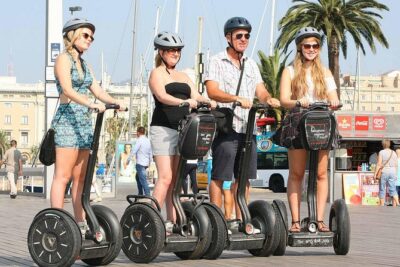
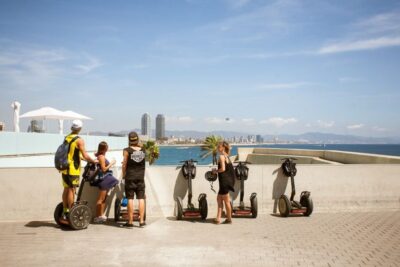
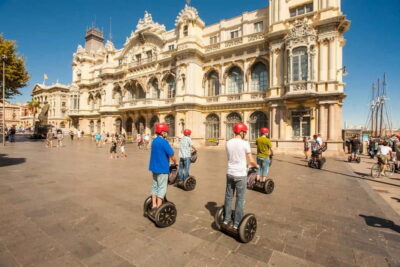
Barcelona: 2-Hour City Sights Guided Segway Tour
Read our review →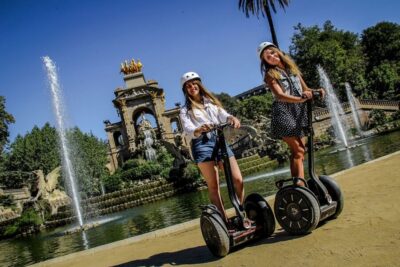

Barcelona: City and Seafront Guided Segway Tour
Read our review →
Browse the lists this tour appears in