
REVIEW · GERMANY
Ultimate Berlin Segway Tour Experience
Berlin is a fine city for a Segway. It is mostly flat, many major sights sit close to parks and bike lanes, and the machine lets you cover far more ground than you can on foot. In roughly one to two and a half hours, you can see the Brandenburg Gate, Reichstag, Holocaust Memorial, Checkpoint Charlie, and Alexanderplatz without wearing out your shoes.
I like the careful beginner training and the chance to get your bearings before choosing which sights deserve a longer visit. I also like the guides’ personal touch. Morgan is repeatedly praised for clear instruction and good photographs, while Franco and Nachiket are known for lively, informed tours.
The main drawback is that a Segway is still a vehicle in a busy city. You ride near traffic, parked cars, pedestrians, and crowded crossings. Most outings go smoothly, but one serious complaint involved a collision and injury, so you should take the safety briefing seriously and speak up if you do not feel ready.
Key points to know before you book
- Training comes first: Beginners get practice time before joining the city route, and several guides check your balance and technique before setting off.
- A lot of Berlin in one outing: The route links Museum Island, Bebelplatz, Brandenburg Gate, the Reichstag, Potsdamer Platz, Checkpoint Charlie, Gendarmenmarkt, and Alexanderplatz.
- The guides shape the experience: Morgan, Franco, Nachiket, Nikesh, and others are praised for history, patience, and good group care, though storytelling styles can vary.
- The ride is efficient, not museum-focused: Stops are generally about five minutes, so you see landmarks from outside rather than touring their interiors.
- Small groups help: The maximum group size is 15, and some departures may be much smaller.
- Weather matters: Rain, cold, snow, and strong wind can change the mood and shorten the outing, so check the forecast and dress for the ride.
Why a Segway works well in central Berlin
I like this tour most as a first look at Berlin. The city’s major political, cultural, and Cold War sites are spread across a broad central area. Walking between all of them takes time, while a Segway links them in a single outing.
You are not simply riding from one photo stop to another. As you move through the city, the guide explains how Berlin changed from Prussian capital to divided Cold War city to the reunited German capital. The short stops give you a useful framework for later visits.
That said, this is a sightseeing ride, not a detailed historical seminar. Most stops last about five minutes. You will hear the essential story, take photographs, and move on. If you want to read every panel at Checkpoint Charlie or spend an hour at the Holocaust Memorial, return later on your own.
The experience is offered in English and includes the Segway, helmet, insurance, a professional local guide, and training. Lunch is not included. The price is listed at $54.41 per person, which is fair if you value speed and an introduction to many parts of Berlin. It is less attractive if you plan to spend your time inside museums or prefer slow, detailed walking tours.
A few more segway tours around Berlin worth a look
- Berlin 2-Hour Segway Tour
★ 4.6 · 238 reviews - Berlin: 2-Hour Premium Segway Tour
★ 4.5 · 185 reviews - 2-Hour Segway Discovery Tour Berlin
★ 5.0 · 154 reviews
Starting at Claire-Waldoff-Straße 6
The meeting point is at Claire-Waldoff-Straße 6, 10117 Berlin, near public transportation. The tour ends back at this same location, so you do not need to arrange a second meeting point across the city.
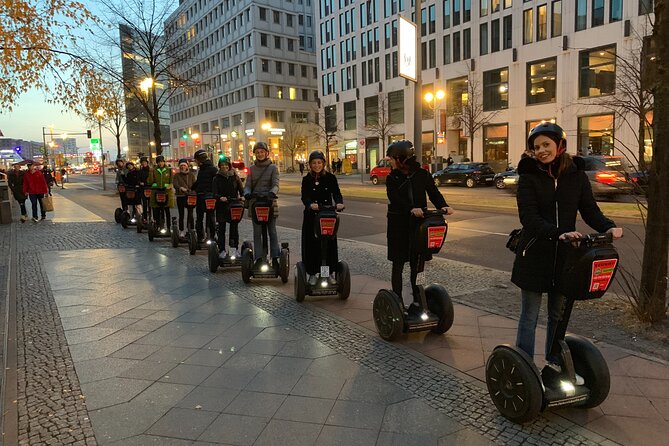
The first part is the safety and control lesson. This matters more than it may sound. Several people with no previous Segway experience became comfortable after a few minutes of practice, and older riders also found the machines manageable after instruction.
Expect the guide to watch how you turn, stop, and balance before leading you into central Berlin. Morgan, in particular, is praised for checking technique and adjusting the pace. One guide also helped a less confident rider through the route, which shows why it is worth telling the staff honestly how you feel.
Do not rush this stage. If you are nervous, ask for another practice round. The operator says alternatives such as an e-scooter or e-bike may be offered when someone does not feel comfortable riding a Segway, though you should confirm what is available on your departure.
Museum Island and Bebelplatz: Berlin’s cultural core
Museum Island is an excellent opening sight. You ride past the exteriors of five famous museums beside the Spree River, with time to admire the architecture and take pictures. The guide explains what the museums contain and why the island has UNESCO World Heritage status.
The value here is orientation. You quickly see where Berlin’s major art collections sit, even though admission to the museums is not part of the tour. I would mark the museums that interest you and return later with a timed entry if you want to go inside.
Bebelplatz brings a darker subject. The square is known for the 1933 Nazi book burning, and the underground memorial makes the site a quiet place for reflection. The surrounding State Opera House and other grand buildings show the contrast between Berlin’s formal architecture and the events that took place here.
Five minutes is enough for an introduction, but not for a full treatment of the Nazi period. Listen carefully to the guide, then return on foot if this is an important part of your Berlin visit.
Brandenburg Gate and the Reichstag
The Brandenburg Gate is the tour’s classic photograph. This neoclassical monument once marked a city entrance, then became a symbol of Berlin’s division and later its reunification. Your guide explains those changes while you look at the gate from the open area around it.
The stop is especially useful early in your visit because the gate helps you understand the shape of central Berlin. From here, the Reichstag, Holocaust Memorial, Tiergarten, and nearby government district all fit into a walkable area.
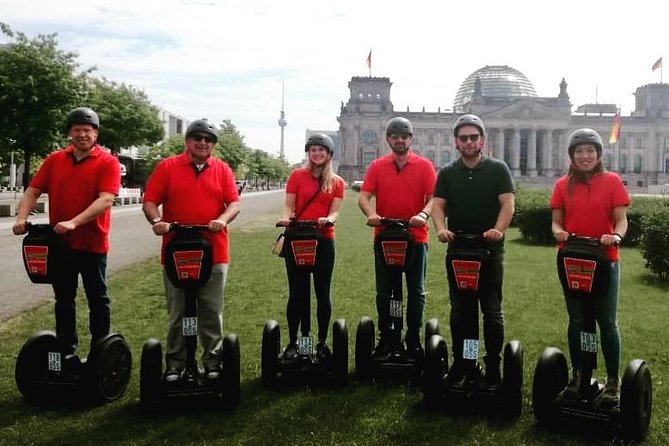
At the Reichstag, you see the exterior and hear about its role as the seat of the German Parliament. The building’s past includes war, fire, political upheaval, and the return of parliament to Berlin after reunification. The glass dome is visible, but entry inside is not part of this tour.
If you want to visit the dome, treat that as a separate plan. The Segway stop gives you context and a photograph, not access to the building. The surrounding gardens also provide a welcome pause from the traffic and hard pavement.
Same city, a different route:
- Berlin Small Group Segway Adventure: Explore in 2 Hours!
★ 4.5 · 140 reviews - Berlin’s Best: Guided Segway tour Adventure
★ 4.7 · 139 reviews - Berlin: 3-Hour Segway Tour
★ 4.7 · 112 reviews - Half-Day Berlin Highlights Segway Expedition
★ 4.5 · 61 reviews
Bellevue Palace and the Victory Column
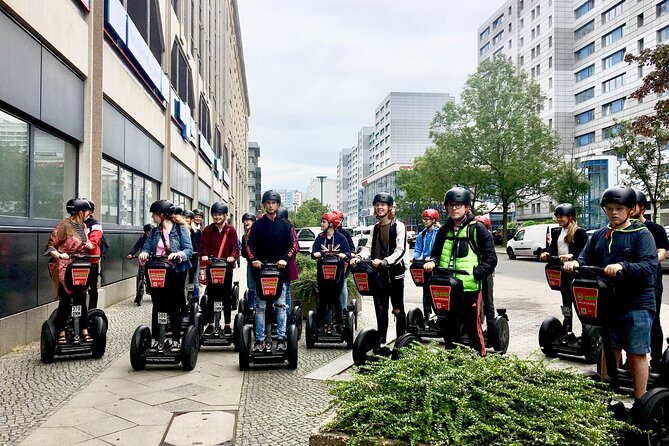
Bellevue Palace offers a look at modern Germany’s ceremonial side. It is the official residence of the German President, and the guide explains its role and architectural character. You see the palace and gardens from outside, with time for photographs.
The stop may appeal more to visitors interested in present-day government than to those focused only on old Berlin. It also gives the route a quieter stretch before returning toward central monuments.
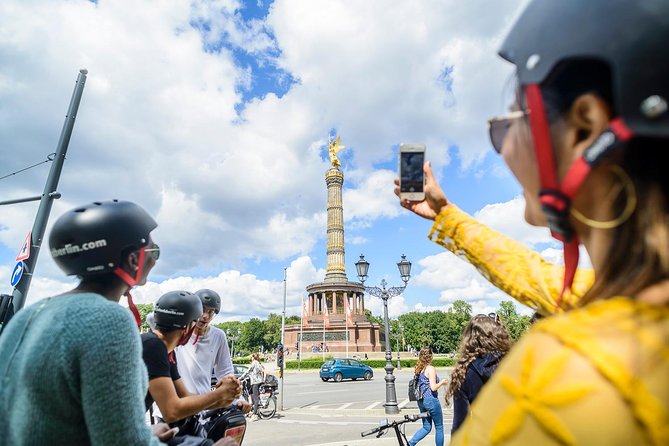
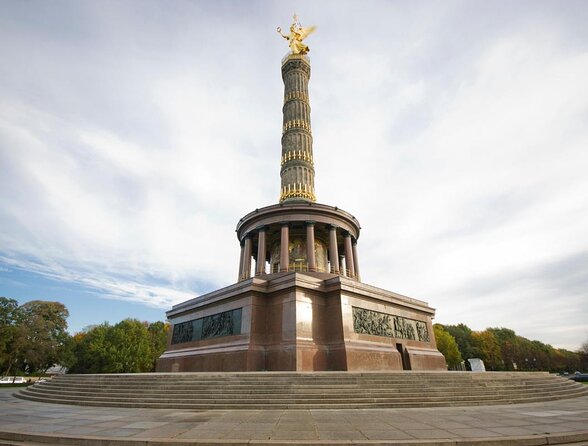
The Victory Column rises in the Tiergarten and is easy to recognize because of the golden figure at its top. The monument celebrates Prussian military victories, a reminder that Berlin’s story is not only about the twentieth century.
The surrounding park creates one of the more pleasant riding sections. You get a break from dense streets while hearing about Prussia and Berlin’s earlier political identity. The guide can point out the city views, but the tour does not include a climb up the column.
The Holocaust Memorial requires respect
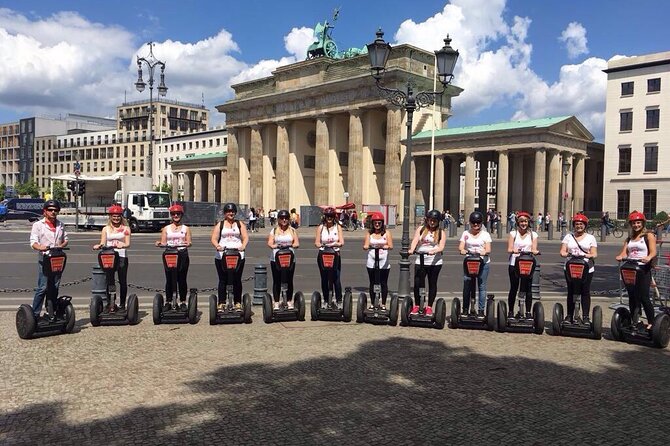
The Memorial to the Murdered Jews of Europe is made up of 2,711 concrete slabs of different heights. The narrow paths between them create an unsettling sense of changing scale and direction.
A Segway cannot take you through the memorial itself. You should expect to leave the machine and walk briefly among the slabs if the guide allows time. The planned stop is short, so you may only get an introduction before continuing.
I value the fact that the route includes this place, but I would not treat it as a quick photo prop. Keep your voice low, do not climb on the concrete blocks, and plan a separate visit if you want time to think about the memorial’s design and purpose.
This is one of the stops where the speed of the tour is most noticeable. The guide can provide the setting and basic explanation, but remembrance deserves more than a rushed five-minute pause.
Potsdamer Platz shows the new Berlin
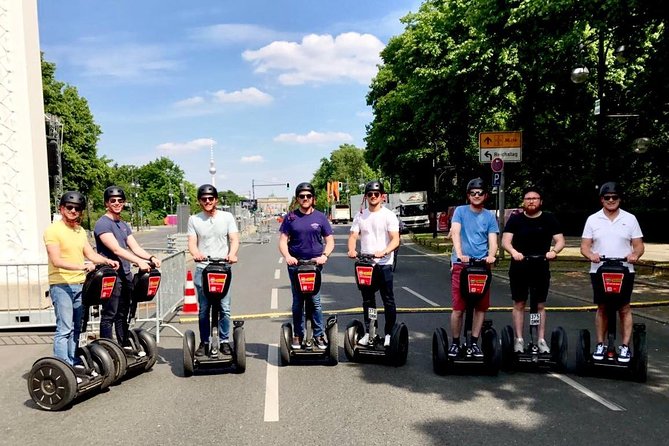
Potsdamer Platz gives the tour a sharp change of mood. Once a major crossroads, the area was cut through by the Berlin Wall and later rebuilt as a modern commercial center. Its office towers, shops, restaurants, and Sony Center show how quickly central Berlin changed after reunification.
This is a good place to see the city’s modern side. If you have spent the morning looking at royal buildings, war memorials, and Cold War sites, the contemporary architecture provides a useful contrast.
You will have time for photographs, but not necessarily for shopping or a meal. Since lunch is not included, plan food before or after the ride rather than assuming the tour will stop for a proper break.
Checkpoint Charlie and the Cold War story
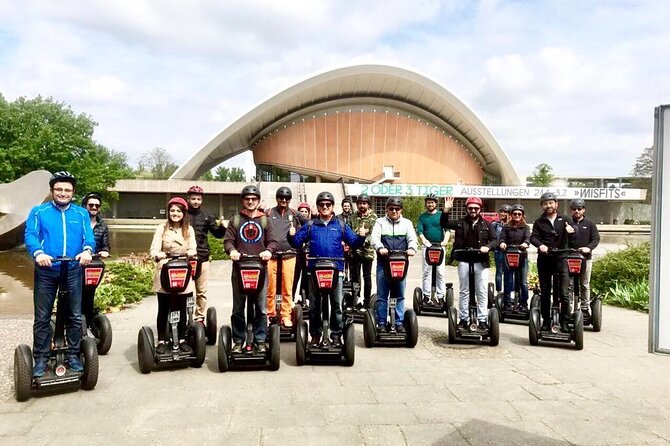
Checkpoint Charlie is one of Berlin’s best-known Cold War sites. The former crossing point linked the American sector of West Berlin with East Berlin, and the guide discusses escape attempts, the city’s division, and the tense events connected with the checkpoint.
The small guardhouse and nearby displays are easy to recognize. The area can also feel commercial and crowded, with souvenir shops and heavy foot traffic. That contrast is part of the modern experience: a serious historical location now sits in a busy shopping district.
The stop works best as a short introduction. You will not have time to study every exhibit, and the route may not linger if conditions are crowded. One account also described a guide suggesting that Checkpoint Charlie be skipped, so it is sensible to confirm the planned route at the start if this site matters to you.
Gendarmenmarkt and Alexanderplatz
Gendarmenmarkt is one of central Berlin’s finest squares. The German Cathedral, French Cathedral, and Concert Hall face one another in a carefully arranged setting. It is an easy place to appreciate the city’s architectural ambition and take photographs without the heavy political weight of some earlier stops.
The square also helps you see Berlin as a cultural capital, not only a place of war and division. Depending on restoration work or local conditions, the appearance of individual buildings can change, so listen to the guide for the current details.
Alexanderplatz gives you the final burst of city energy. The TV Tower dominates the view, while shops, restaurants, performers, and public transport make the square one of Berlin’s busiest urban centers.
The guide explains how Alexanderplatz changed from a traditional marketplace into a modern public square. You see the tower from ground level, but admission to its viewing platform is not included. If the tower interests you, save it for a separate visit and book ahead according to your plans.
What the guides add to the ride
The strongest part of this experience is often the person leading it. Morgan receives especially warm praise for his English tours, patience, photo help, and ability to add extra sights when the group finishes early. Franco is described as energetic and strong on historical detail, while Nachiket and Nikesh are also praised for going out of their way to help.
You may get a guide who tells stories with humor and pace, or one who presents the facts more quietly. One outing was criticized for political commentary and for not giving enough historical explanation. That is a useful reminder that guiding style is personal, and the same route can feel different with different staff.
If you care about the guide, you can ask at booking if a specific person is available, but the supplied information does not promise a particular guide. Ask clear questions, request balanced historical context, and say so if the pace or explanation is not working for you.
Safety, weather, and riding comfort
Berlin’s flat streets and bike lanes make it a sensible city for a Segway, but that does not remove risk. You may ride near parked cars, moving traffic, pedestrians, and crowded intersections. Keep a safe distance, follow the guide’s signals, and never pretend to be comfortable if you are not.
One serious incident involved a rider falling after a Segway wheel rubbed a parked taxi. The account raised concerns about street safety and the handling of payment after the collision. The operator says training is provided and that rider mistakes can cause accidents. The fair advice is to accept personal responsibility for control while also expecting clear instructions and calm assistance from the guide.
Weather can change the experience quickly. Rain, snow, freezing wind, and hot sun have all affected outings. Raincoats may be available, but you should still wear layers, secure shoes, and clothing suitable for two hours outdoors. Take water on warm days.
The maximum group size is 15, though some departures may have only two or four people. A smaller group can make it easier to ask questions and adjust the pace. The published experience is suitable for most people, but you should consider your balance, confidence, and comfort around traffic before booking.
Is $54.41 good value?
At $54.41 per person, the tour costs more than a simple walk through central Berlin but buys you speed, equipment, training, insurance, and a guide. I see the best value in using it on your first day, when you want a map in your head before deciding where to spend a full afternoon.
The short stops mean you are paying for breadth rather than depth. You can see ten major places, but you will not tour the museums, enter the Reichstag dome, climb the Victory Column, or visit the TV Tower platform as part of the standard outing.
The duration varies from about one hour to two and a half hours, so confirm the exact option before paying. The longer ride offers better value if you want a broad city overview. A short version may suit you if you mainly want to try a Segway and see a few central sights.
Free cancellation is available up to 24 hours before the start time. Changes or cancellations inside that window are not accepted for a refund.
Who should book it?
I would book this for a first-time Berlin visitor who wants a fast orientation, enjoys light outdoor activity, and does not mind seeing major sights mostly from the outside. It is also useful for families with older children and adults who would rather ride than walk long distances.
I would be more cautious if you dislike traffic, have balance concerns, want detailed museum visits, or prefer a slow conversation at every historical site. In those cases, walking, public transport, or a focused museum tour may suit you better.
Book early if your schedule is tight, since the experience is often reserved around 15 days ahead. Check the weather, confirm the length, and ask which landmarks will definitely be included.
Final call: a fast and useful first look at Berlin
This tour earns its good reputation through three things: easy beginner training, efficient routing, and guides who often add warmth and strong local stories. Morgan, Franco, Nachiket, and Nikesh are names worth asking about, though your actual guide may differ.
I would book it for orientation and fun, not as a replacement for visiting Berlin’s museums and memorials properly. Go in ready to ride safely, expect short stops, and return later to the places that catch your attention. If that sounds like your kind of sightseeing, $54.41 is a reasonable price for a quick, memorable introduction to central Berlin.
FAQ
How much does the Ultimate Berlin Segway Tour cost?
The listed price is $54.41 per person.
How long does the tour last?
The approximate duration ranges from one hour to two hours and 30 minutes. Confirm the exact tour length when booking.
Is the tour offered in English?
Yes. The experience is offered in English.
Is Segway training included?
Yes. Training is included before the city ride begins. A helmet, insurance, the Segway, and a professional local guide are also included.
Where does the tour start and end?
The tour starts at Claire-Waldoff-Straße 6, 10117 Berlin, Germany, and ends back at the same meeting point.
Which Berlin sights are included?
The route includes Museum Island, Bebelplatz, Brandenburg Gate, the Reichstag Building, Bellevue Palace, the Victory Column, the Holocaust Memorial, Potsdamer Platz, Checkpoint Charlie, Gendarmenmarkt, and Alexanderplatz.
Is lunch included?
No. Lunch is not included.
How many people can join the tour?
The maximum group size is 15 people.
Can I cancel for a full refund?
Yes, if you cancel at least 24 hours before the experience starts. Cancellations or changes made less than 24 hours before the start time are not accepted for a refund.
Just added around Berlin
- Berlin: Exclusive VIP Private Segway tour Experience★ 5.0 · 34 reviews
- Berlin Segway Adventure: Explore the City in Style!★ 5.0 · 33 reviews
- Berlin : Unique Segway Tour – Time Travel through the Capital★ 5.0 · 8 reviews
- 2-H Segway Sightseeing Tour Berlin★ 4.5 · 11 reviews
- Berlin: One-Hour Segway Signature Tour★ 5.0 · 11 reviews
- 3 Hours Segway Discovery Tour Berlin★ 4.5 · 58 reviews
- 3 Hour Berlin Guided VIP Private Segway Tour★ 5.0 · 5 reviews
- 1-Hour Segway Discovery Tour Berlin★ 4.5 · 17 reviews
Germany Segway Tours, compared.

Dresden: Segway Tour Along the Elbe and Old Town
Read our review →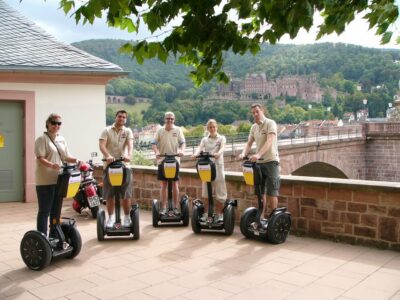
Heidelberg: Philosophers’ Walk Guided Segway Tour
Read our review →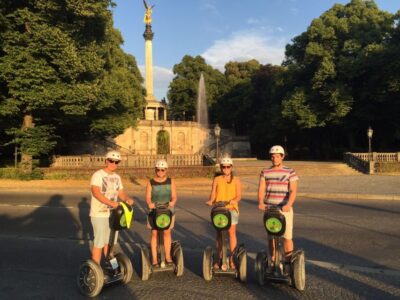
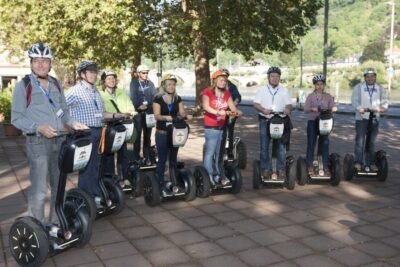
Heidelberg & Neckar Valley: Segway Tour – 360 Degrees
Read our review →
Munich 3-Hour Segway Tour: Nazi Munich & Royal Architecture
Read our review →
Browse the lists this tour appears in