
REVIEW · AUSTRALIA
Best of Uluru – Segway and Walking Tour
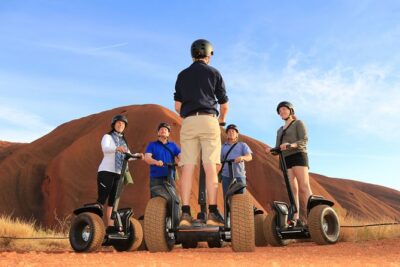
Uluru is enormous, and this tour gives you two good ways to meet it: a smooth Segway ride beside its red sandstone walls and a slower walk into caves, rock art, and the Mutitjulu Waterhole. The mix lets you cover ground without turning the whole morning into a long walk.
I especially like the patient Segway training and the guides’ clear storytelling. Sye, Tori, Brittany, Nick, and others have earned strong praise for making first-time riders feel at ease and for explaining Anangu culture with care. The main catch is simple: this is not a Segway-only trip. You will walk, sometimes in the heat, and the tour covers only about a quarter of Uluru’s base.
- A gentle introduction to Segways: You receive about 30 minutes of training before the ride, so first-timers are welcome if they can ride a bicycle.
- Mutitjulu Waterhole on foot: This quiet section brings you close to water, caves, rock art, and important Anangu stories.
- A small group of up to 10: The guide can offer individual help, take photographs, and keep the group together.
- Kantju Gorge and the Mala Walk: Walking sections add details and places a vehicle or Segway ride alone would miss.
- A practical half-day format: Hotel pickup, transport, training, riding, and walking fit into roughly four to five hours.
- Good value, with one extra cost: The $119 price includes transfers and guiding, but you must buy a separate Uluru-Kata Tjuta National Park entry ticket.
Why the Segway and Walking Combination Works
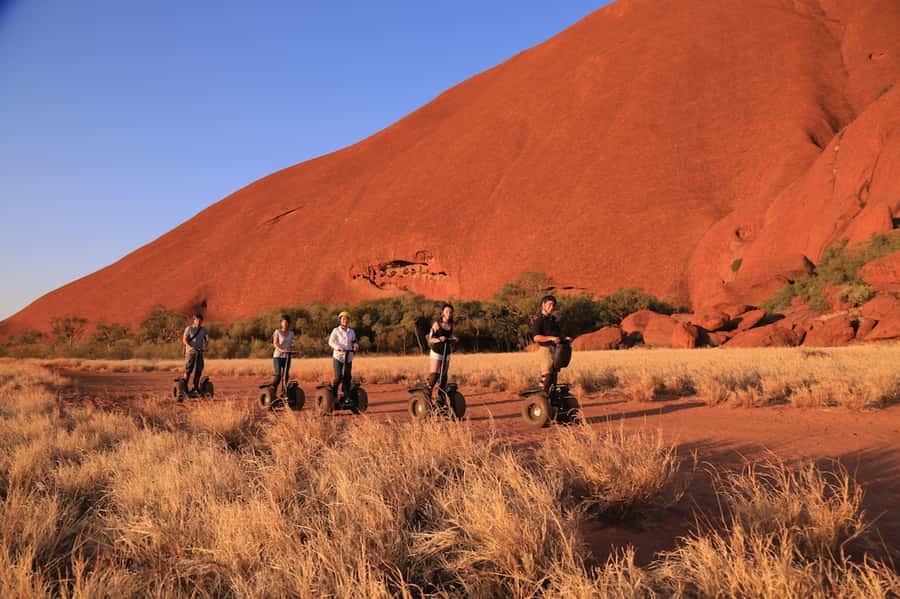
A full circuit of Uluru’s base is a serious outing, especially under the Central Australian sun. This tour takes a more manageable approach. You ride quietly beside one of the rock’s most scenic sections, then leave the Segway behind to explore places where your feet are the better transport.
That balance is the tour’s strongest idea. The Segway gives you a broad sense of Uluru’s scale and lets you move between viewpoints with less effort. The walks slow you down for caves, Aboriginal rock art, the waterhole, and cultural explanations that would lose their impact if you simply rolled past.
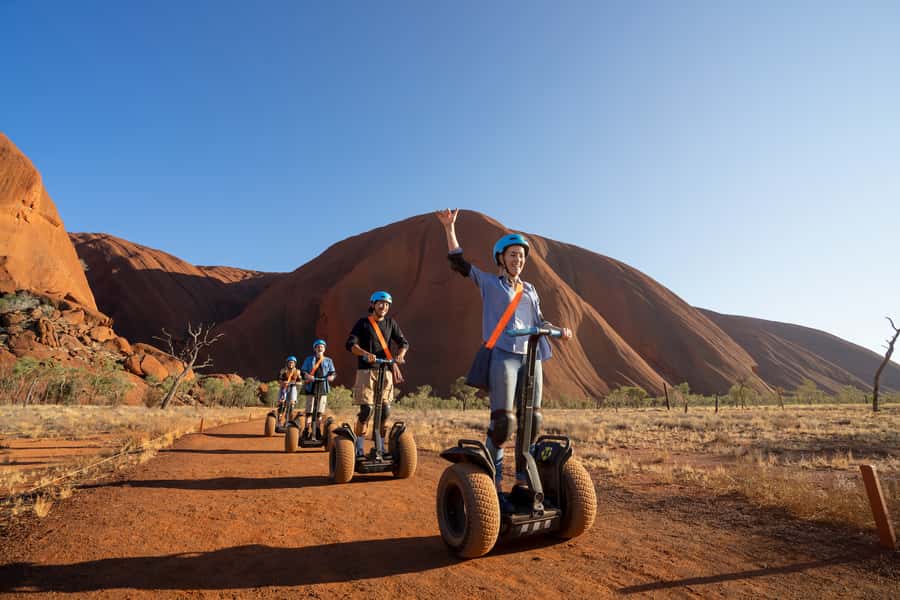
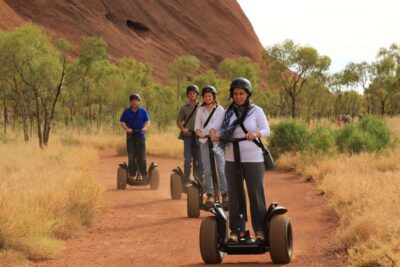
The ride itself is not a thrill attraction. It is a calm, low-speed way to travel on relatively flat ground. Guides stop for photographs and explain the geology, plants, animals, European history, and Anangu traditions connected with the rock. I like that the machine is used as a practical sightseeing tool rather than a gimmick.
You should still expect a physically active morning. One person specifically found the amount of walking easy to underestimate, so read the title carefully: this is a Segway and walking tour. You need closed-toe shoes, water, a hat, and sunglasses. Flip-flops are not accepted.
Starting with Pickup and Segway Training
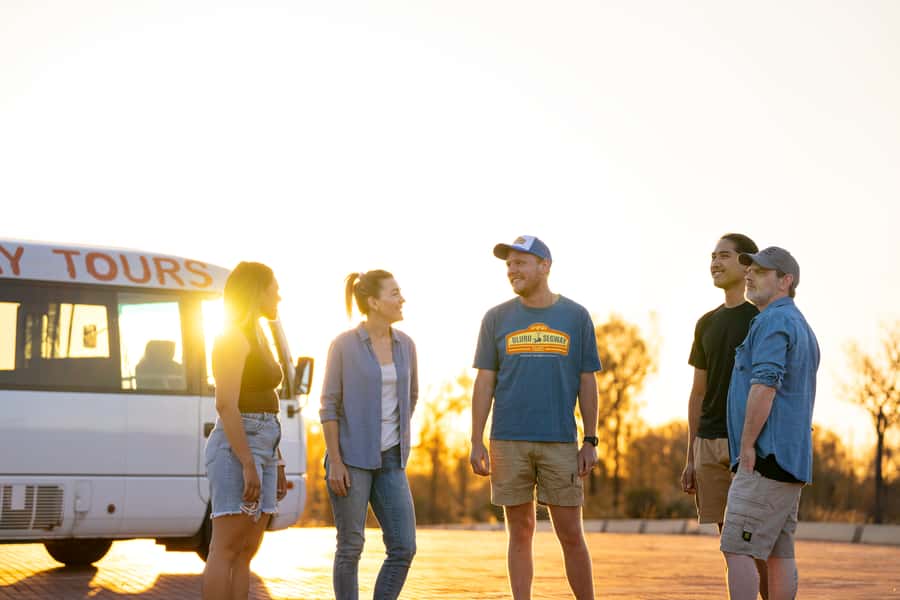
Pickup is available from four places within Ayers Rock Resort: Desert Gardens Hotel, Sails in the Desert, the Outback Pioneer Hotel, and the Ayers Rock Resort Campground. If you are staying at Emu Walk Apartments, the Desert Gardens stop is the relevant pickup point. Guests at The Lost Camel use Sails in the Desert.
The ride to the Uluru base takes about 30 minutes by bus. This transfer is useful because it removes the need to arrange your own transport, though the bus is mainly a way to get to the rock rather than a sightseeing ride in itself.
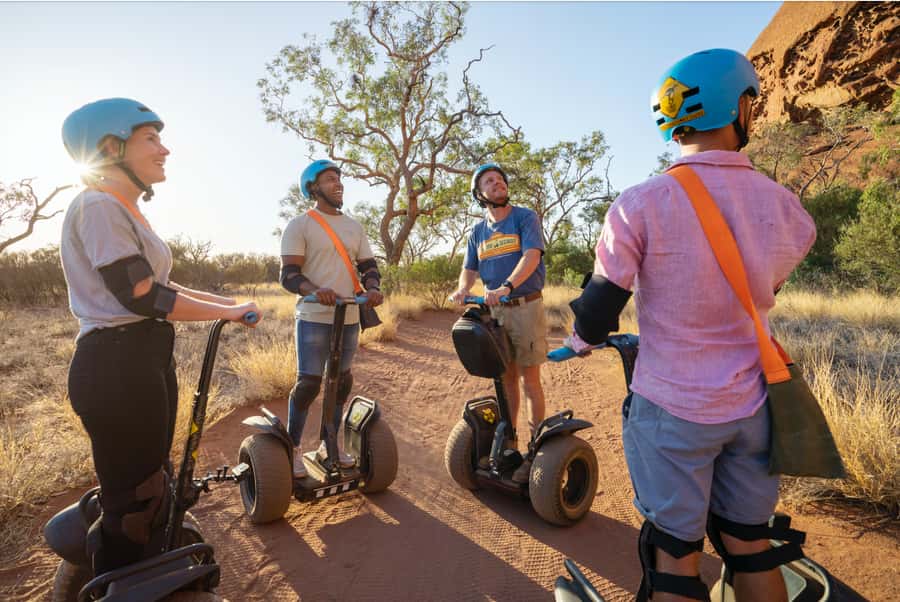
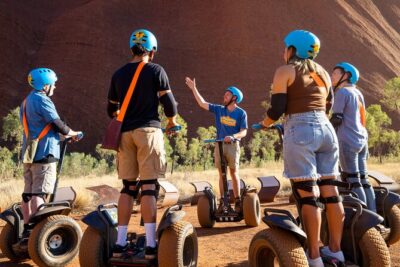
At the Segway base, your guide gives you a safety briefing and about 30 minutes to practice. That training matters. Several people who had never ridden a Segway, including riders in their sixties, found the controls manageable after patient instruction. Guides such as Sam, Emily, and Sye have been singled out for taking time with nervous beginners.
You control the machine by leaning gently forward, backward, or to the side. If you can ride a bicycle and are comfortable standing for periods of time, you are within the tour’s intended audience. Still, the operator recommends the experience for ages 12 to 65, and it is not suitable for anyone who cannot ride a bike, has certain medical conditions, recent surgery, back problems, or pregnancy.
There are also weight limits: participants must be between 99 and 260 pounds, or 45 and 118 kilograms. Wheelchair users and people with visual impairments cannot take part. The stated upper age limit is 70, so anyone outside the recommended range should check before booking.
More Walking Tours in Australia:
- Heidelberg: Philosophers’ Walk Guided Segway Tour
★ 4.8 · 322 reviews
Kantju Gorge and the First Walk
The published route begins with a bus ride to Kantju Gorge, followed by a guided walk of about 45 minutes. The order can feel slightly different depending on the day’s operation, but the important point is that walking begins before or alongside the riding portion.
Kantju Gorge gives you a close look at the way water has shaped Uluru. The gorge and nearby caves make the rock feel less like a single smooth monolith and more like a place with folds, sheltering walls, openings, and changing textures. Your guide explains what you are seeing rather than leaving you with a photo stop and a quick label.
This is also where a good guide adds real value. The tour is designed around Anangu culture, not just scenic views. You hear about the significance of places around Uluru, local customs, plant and animal life, geology, and the arrival of Europeans. Guides have used simple objects such as sticks and stones to explain geological ideas, which can make the story easier to follow than a long technical talk.
Allow enough energy for this section. Forty-five minutes on foot can feel easy in cool weather and much harder in hot conditions. The tour’s duration changes between four and five hours, and the exact pace depends on the group, so do not plan a tight activity immediately afterward.
Cruising Along Uluru’s Base
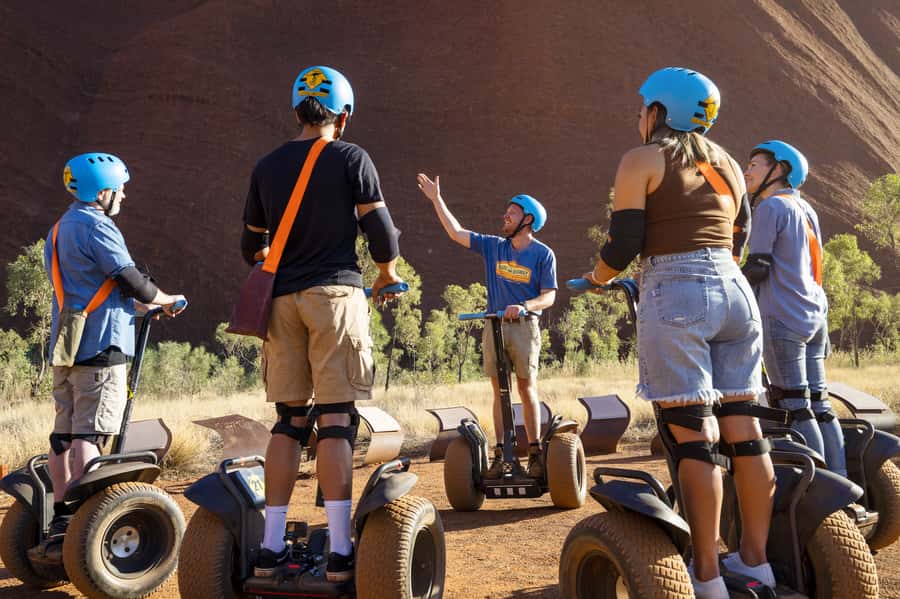
After a short bus transfer, the main Segway ride lasts about an hour and a half, including the guided riding portion. The actual included guided Segway tour is listed as one hour, with the wider timetable allowing for preparation and movement between sections.
You travel along a scenic quarter of Uluru’s base. That is an important expectation to set. You are not circling the entire rock, and you are not covering every major viewpoint. Instead, you get a focused look at one of its most impressive sections without committing to a full walking circuit.
The Segway is particularly useful here because it lets you glide quietly along the base. There is no engine noise from the machine itself, and you can concentrate on the changing surface of the sandstone. The guides stop to explain what is in front of you and allow time for photographs.
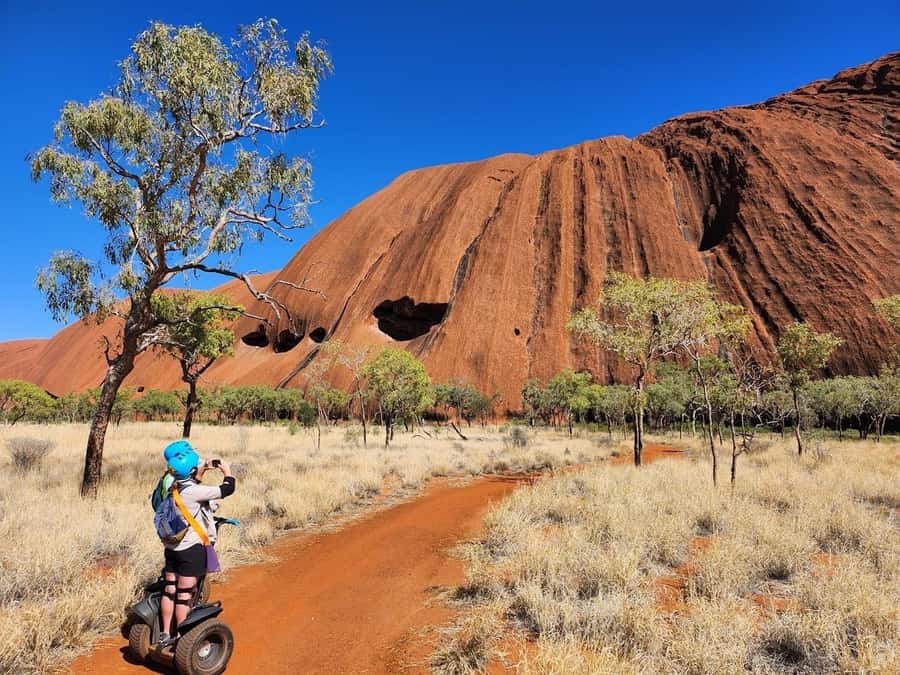
This is also where guides such as Thomas and Brandon have made a difference by taking group photographs. Bring a fully charged phone, though. One person’s battery died halfway through the outing and missed some personal photo opportunities. A power bank is a sensible addition because phone charging on the bus is not guaranteed.
Do not confuse convenience with complete ease. You will stand on the Segway, mount and dismount, listen while stationary, and follow the guide’s directions. The route is described as flat enough for beginners, but you still need reasonable balance and mobility.
Mutitjulu Waterhole and Aboriginal Rock Art
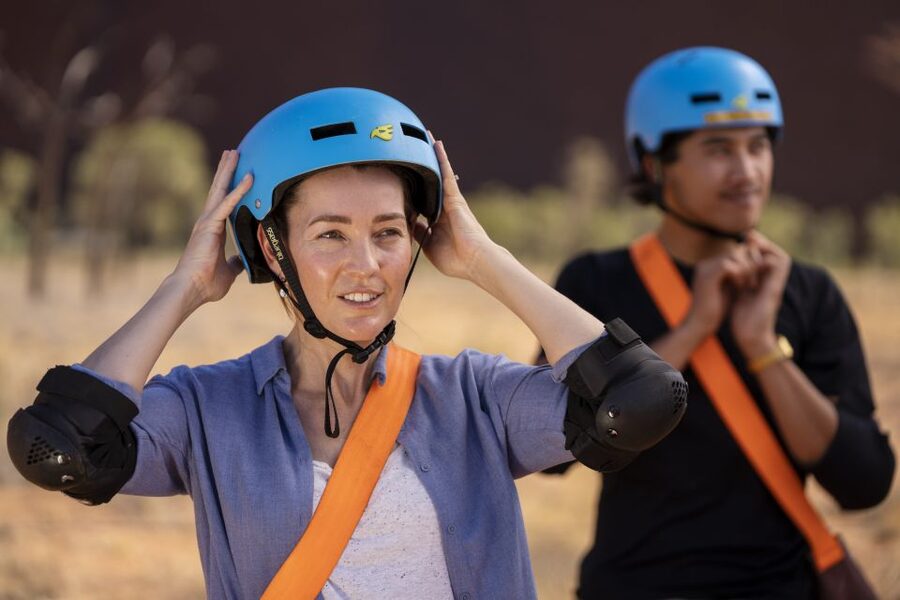
The walk to Mutitjulu Waterhole is one of the most rewarding parts of the experience because it changes the mood. After the open views and movement of the Segway ride, you enter a quieter place where water, shade, caves, and sound become the focus.
The guide points out the waterhole’s sights and sounds and explains why this area matters to the local Anangu people. You also see authentic Aboriginal rock art. This is not just an opportunity to take another red-rock photograph. It gives you a direct link to the people who have lived with and cared for this place over generations.
The cultural explanations are best treated with attention and respect. The tour is not simply a geology lesson with a few Aboriginal details added on. Its purpose is to help you understand Uluru through Anangu culture, local stories, and the physical setting together.
The walk lasts about 30 minutes according to the schedule, though time in the area can depend on the group and the guide. You should have your water with you and protect yourself from the sun. In warmer months, flies can be a serious nuisance. A fly net is worth considering, especially if you dislike eating or walking with insects around your face.
A few more segway tours around Australia worth a look
- Brisbane Segway Sightseeing Tour
★ 5.0 · 629 reviews - Perth East Foreshore and City Segway Tour
★ 5.0 · 549 reviews - Segway the FULL base of Uluru
★ 5.0 · 449 reviews - Uluru Base Segway Tour at Sunrise
★ 4.9 · 378 reviews
The Mala Walk, Caves, and Photography
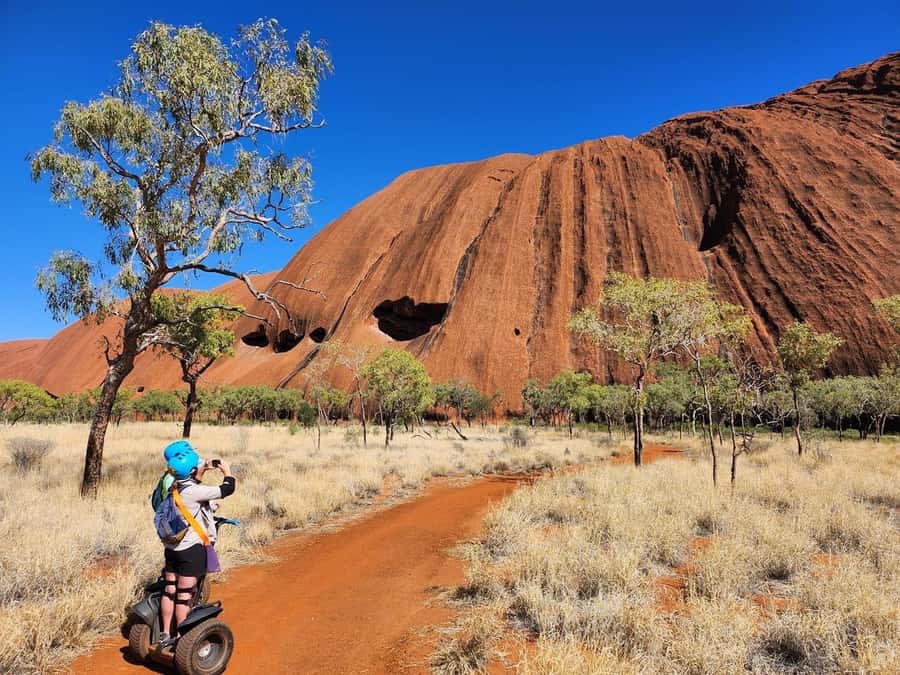
The Mala Walk adds another close look at Uluru’s base. You explore caves and learn about local Aboriginal culture while moving through a section that rewards careful observation. The caves are not a side note. They help you see how the rock has been used as shelter and how its formations connect with stories and daily life.
This part suits anyone who prefers a guide who explains the place rather than simply leading you from point to point. Guides including Brittany, Tori, Amber, and Blaize have been praised for combining cultural information with friendly, practical help. The best moments here come when the guide links a physical feature, a story, and the people connected with it.
You will have chances to photograph the rock from close range. A guide can also take pictures of you and your companions, which is useful because group shots are difficult when everyone is carrying phones and trying to frame the same view.
The walking sections are also the tour’s main limitation. The experience suits someone who wants to reduce walking, not eliminate it. If hip pain, back trouble, recent surgery, or another medical issue makes uneven outdoor walking difficult, the Segway does not solve the entire problem.
Guides Make the Difference
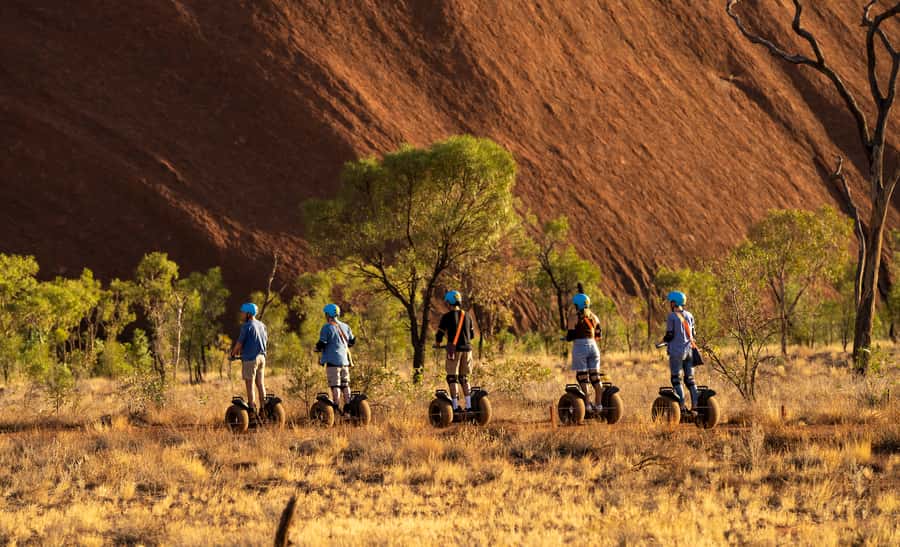
The equipment is fun, but the guides are the heart of the outing. Names frequently associated with particularly warm and effective tours include Sye, Nick, Kayla, Jess, Britney, Emily, Tori, Thomas, Sarah, Amber, Sam, Kyle, Lizzy, Betty, Brandon, and Blaize.
You are not guaranteed a particular guide, but the pattern is clear: the operator puts considerable weight on instruction, safety, cultural interpretation, and group care. A strong guide can turn a basic ride into a useful introduction to Uluru. A rushed guide would leave you with little more than a few red-rock pictures.
The guides also appear to adjust to different abilities. Older beginners have been helped through the training, and people who were unsure about riding have often found the Segway easier than expected. That does not make the activity suitable for everyone, but it does mean you should not dismiss it simply because you have never tried one.
English is the live guiding language. Audio guides are listed in Spanish, Chinese, French, German, Italian, and Japanese, giving you another way to follow key information if English is not your first language.
Is $119 Good Value?
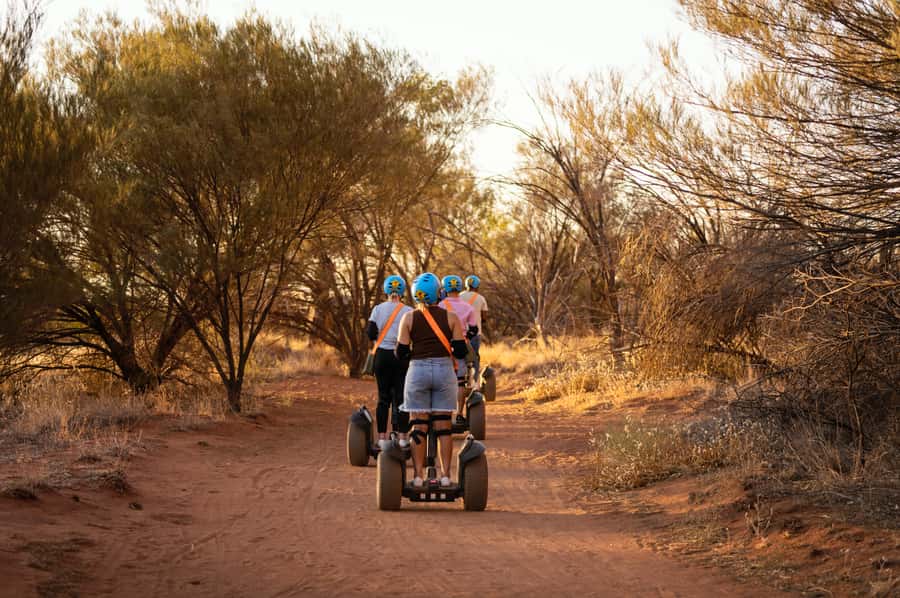
At $119 per person, the price is reasonable for a half-day Uluru experience that includes hotel transfers, Segway instruction, the guided ride, the Mutitjulu Waterhole walk, and the Mala Walk. You are paying for a small group capped at 10, not just for use of the machine.
The value is strongest if you would otherwise need to organize transport and separate walks yourself. The guide provides structure and context, while the Segway lets you see a substantial section of the base without spending the entire day on foot.
The National Park entry ticket is extra, so add that to your budget. The tour also does not promise a meal, and you should not assume refreshments beyond what is specifically stated. Bring water, especially because one past outing would have benefited from a better onboard cold-water supply.
The tour offers free cancellation up to 24 hours before departure and a reserve-now, pay-later option. Those policies are useful in the Red Centre, where weather and personal plans can change, but the bigger decision is whether the combination of riding and walking fits your needs.
Who Should Book This Tour?
I would choose this for a first visit to Uluru when you want cultural explanation, close views, and a manageable way to cover ground. It works particularly well for couples, families with children aged 12 and over, and adults who want to avoid walking the full base circuit.
It is also a good choice if you are curious about Segways but do not want a technical or high-speed activity. The training is designed for beginners, and the small group gives the guide room to help.
I would look elsewhere if you want a complete circuit of Uluru, a long wilderness walk, or a purely sightseeing-based bus trip. I would also avoid it if you cannot ride a bicycle, cannot stand and walk comfortably, are outside the stated weight limits, or have a condition that makes riding or walking unsafe.
Practical Tips for a Better Morning
- Wear closed-toe shoes with a secure fit. Open-toed shoes and flip-flops are not allowed.
- Bring water, sunglasses, and a broad-brimmed hat.
- Charge your phone fully and pack a power bank if photography matters to you.
- Consider a fly net during warmer months.
- Keep some flexibility after the tour because the full outing can last five hours.
- Buy your Uluru-Kata Tjuta National Park entry ticket before arrival.
- Tell the operator your accommodation clearly so pickup is assigned correctly.
- Listen closely during training, even if you have ridden a Segway before. The guide is setting the rules for this particular route.
Should You Book the Uluru Segway and Walking Tour?
Book it if you want a well-balanced introduction to Uluru rather than a single long walk or a quick bus stop. The combination of a scenic Segway ride, Mutitjulu Waterhole, Mala caves, Aboriginal rock art, and patient cultural guiding gives you a fuller visit than the machine alone could provide.
Skip it if you need a completely seated outing, want to circle the whole base, or are uncomfortable with the physical requirements. For most fit visitors who meet the age and weight guidelines, $119 is a fair price for the transport, small group, instruction, and access to several important places in one morning.
FAQ
How long does the Uluru Segway and walking tour last?
The tour lasts approximately four to five hours, including hotel transfers, Segway training, the guided ride, and the walking sections.
Where can I be picked up?
Pickup is available from Desert Gardens Hotel, Sails in the Desert, the Outback Pioneer Hotel, and the Ayers Rock Resort Campground. Desert Gardens also serves visitors staying at Emu Walk Apartments, while Sails in the Desert also serves The Lost Camel Hotel.
Do I need previous Segway experience?
No. The tour includes about 30 minutes of Segway training, a safety briefing, and practice riding. You do need to be able to ride a bicycle.
Is walking included?
Yes. The experience includes guided walks at Kantju Gorge, Mutitjulu Waterhole, and the Mala Walk. It is not a Segway-only tour.
What should I bring?
Bring sunglasses, a sun hat, water, and closed-toe shoes. Open-toed shoes are not permitted. A fully charged phone and power bank are also practical if you plan to take photographs.
Is the national park entry ticket included?
No. Every participant must buy a separate Uluru-Kata Tjuta National Park entry ticket in advance.
Just added around Australia
- Uluru By Segway – Self Drive your Car to Uluru★ 5.0 · 65 reviews
- Gold Coast Segway Sightseeing Tour★ 3.0 · 2 reviews
- Rottnest Segway Coastal Explorer Tour★ 5.0 · 3 reviews
- Rottnest Fortress Adventure Segway Package★ 4.4 · 11 reviews
- Perth Segway 1.5 Hour Kings Park Tour★ 4.8 · 59 reviews
- Perth Segway 1.5-Hour East Tour★ 5.0 · 25 reviews
- Launceston: Hollybank Forest Guided Segway Tour with Photos★ 4.8 · 21 reviews
- Perth Riverside Segway Tour★ 4.9 · 66 reviews
Australia Segway Tours, compared.
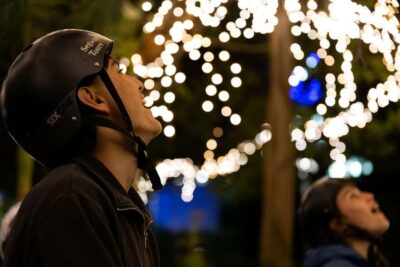
2 hour Brisbane Segway Afternoon & Sunset Thrill Tour
Read our review →
Browse the lists this tour appears in