
REVIEW · USA
Pittsburgh Segway Tour
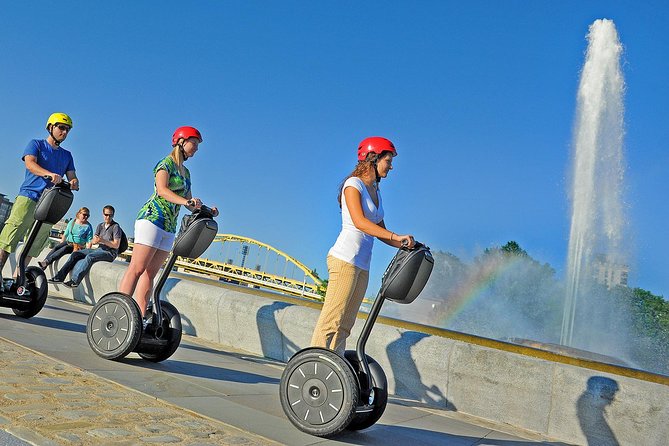
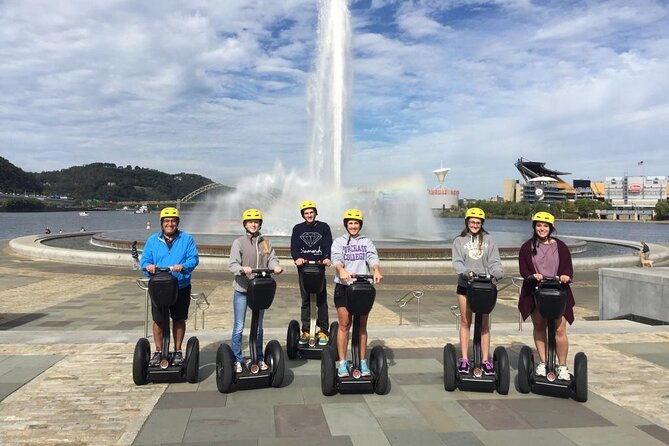
Pittsburgh’s hills, rivers, bridges, and compact downtown make it a fine city for a Segway tour. In about two hours, you cover ground that would take longer on foot, from Station Square across the rivers to PNC Park, Point State Park, Market Square, and the Cultural District.
I like the short riding lesson before departure, and I like the route’s mix of modern Pittsburgh and older civic landmarks. Guide Geno is praised for patience, safety, humor, and helping a guest with special needs. The main drawback is that the tour stays mostly downtown, so you get only a light taste of Pittsburgh’s steel and Carnegie story.
- Three bridges in one outing: Cross iconic Pittsburgh spans, including the Roberto Clemente Bridge.
- A proper practice session: Learn to start, steer, stop, and balance before joining city streets.
- A broad downtown route: See Point State Park, PPG Place, Market Square, PNC Park, and the Cultural District.
- A helpful guide matters: Geno is noted for keeping groups safe, taking photos, and handling different riding abilities.
- Fast sightseeing: The Segway lets you reach the North Shore, Golden Triangle, and river confluence in one short tour.
- A small-group feel: The maximum group size is 20, though the ride can still feel active and quick.
Why Two Wheels Work in Pittsburgh
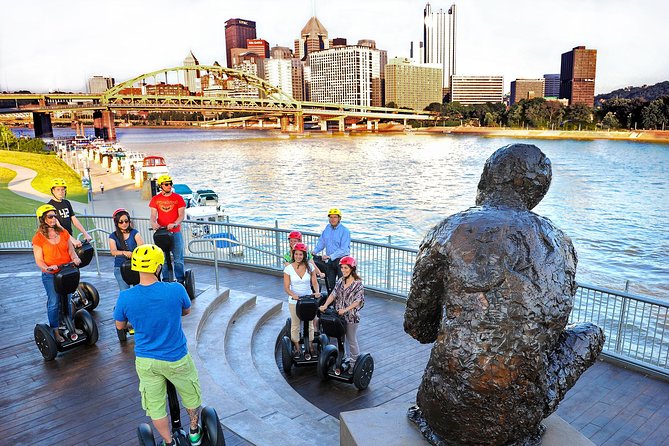
Pittsburgh is shaped by water and steep ground. The Allegheny and Monongahela rivers meet downtown to form the Ohio River, while bridges link the central business district with Station Square and the North Shore.
That geography can make a walking tour feel stop-and-start. A Segway helps you move between districts without spending the whole outing on foot. You can cross a bridge, pause near a landmark, and continue toward the next part of the city while listening to the guide in English.
The ride is not a quiet museum visit. You are balancing, steering, watching the pavement, and keeping a safe distance from the group. Once you get the hang of the machine, the pace feels lively. One rider described the first few minutes as a learning curve, followed by a much more enjoyable ride.
That is the right expectation. If you want a slow, detailed talk at every building, choose a walking tour or museum visit. If you want a broad first look at central Pittsburgh, this format gives you more range in less time.
Starting at Station Square
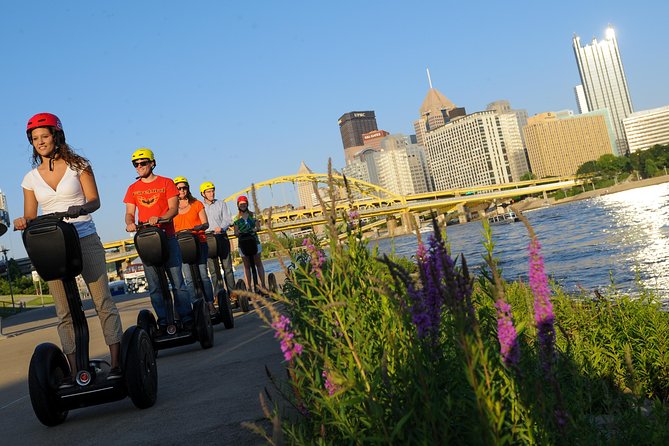
The meeting point is 228 W Station Square Drive, across the river from downtown. The activity begins and ends here, which makes the starting point easy to understand and removes the need to find a different finish point in the middle of your day.
Station Square also gives the route a natural sense of direction. You begin near the Monongahela River, prepare the Segways, and then move toward the bridges and downtown. Public transportation is nearby, so you do not need to build the outing around a long walk from a remote meeting point.
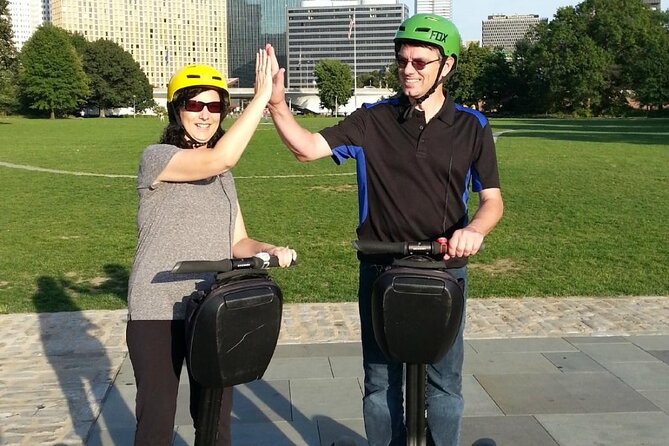
Before setting off, you take a short training course. This is more than a formality. The lesson gives you time to learn how the Segway responds to your weight and movements before you ride in a group.
You should expect to need a moderate level of physical fitness. The activity requires standing, balancing, steering, and paying attention for roughly two hours. The training is especially useful if this is your first Segway ride, but it does not remove the need to stay alert once you reach city streets and bridges.
A few more segway tours around the USA worth a look
- Washington DC “See the City” Guided Sightseeing Segway Tour
★ 5.0 · 1,924 reviews - Guided Segway Tour of Downtown Nashville
★ 5.0 · 1,568 reviews - 60-Minute Guided Segway History Tour of Savannah
★ 5.0 · 1,163 reviews
Crossing Pittsburgh’s Three Bridges
The bridges are one of the strongest parts of the route. Pittsburgh is often called the City of Bridges, and this ride gives that nickname some practical meaning instead of treating it as a slogan.
The route crosses three iconic bridges, including the Roberto Clemente Bridge. From the spans, you can connect Pittsburgh’s major pieces in your mind: Station Square, downtown, the North Shore, the stadium district, and the river junction.
Bridge crossings also give you changing views of the city. You see water, downtown towers, hills, and the movement between neighborhoods. The views are a useful part of the experience, but keep your expectations sensible. This is a moving tour, not a long photography stop at every bridge.
The ride can feel fast-paced. That helps you see a lot, but it means you may want to return later to photograph a favorite view or study a building. I would treat the tour as an orientation to Pittsburgh, then choose one or two places for a more relaxed visit afterward.
Point State Park and the Rivers
Point State Park is at the meeting point of the Allegheny and Monongahela rivers, where the Ohio River begins. It is one of the clearest places to understand Pittsburgh’s layout.
The park gives the tour a useful pause from the tall downtown buildings. Here, the city’s identity is tied directly to its rivers and military past. The Fort Pitt Museum sits at the point and covers the area’s role in the struggles that shaped early Pittsburgh.
You pass the museum rather than taking a full museum tour, so you should not expect an indoor history lesson. Still, seeing the fort site and the rivers together gives context to the city’s location. If you want a closer look at the military story, save time for a separate visit.
Point State Park is also a good reminder of the tour’s balance. The route includes open space, river views, sports venues, office towers, and historic civic buildings. It is not limited to one type of Pittsburgh.
PNC Park and Heinz Field
The route continues to the North Shore, home to PNC Park and Heinz Field. PNC Park is the home of the Pittsburgh Pirates and opened during the 2001 Major League Baseball season after Three Rivers Stadium was demolished.
Heinz Field serves as the home of the Pittsburgh Steelers and the University of Pittsburgh Panthers. Together, these venues show how important sports are to the city’s modern identity.
You will see the stadium area from outside as you ride through. That is valuable for getting your bearings, especially if you are visiting for a game, but it is not a stadium tour and does not include entry.
The North Shore section also gives the outing a change of mood. Downtown’s offices and civic buildings give way to larger public venues and open riverfront space. If a game or event is taking place, the area may feel more crowded, so allow extra time around your broader day plan.
Same city, a different route:
- Fort Lauderdale Segway Tour
★ 5.0 · 1,017 reviews - 90 Minute Historic Uptown Neighborhood Segway Tour of Charlotte
★ 5.0 · 917 reviews - 2-Hour Guided Segway Tour of Asheville
★ 5.0 · 676 reviews - 2-Hour Guided Segway Tour of Huntington Beach State Park in Myrtle Beach
★ 5.0 · 504 reviews
Market Square and PPG Place
Market Square sits at the meeting of Market Street and Forbes Avenue in the center of downtown. It is one of the route’s more recognizable urban stops and gives you a look at Pittsburgh’s public heart.
Nearby, PPG Place brings a very different style. The complex occupies a 5.5-acre, three-city-block site and is centered on a 40-story office tower. Its reflective glass catches the surrounding sky, hills, rivers, and buildings.
These two stops work well together. Market Square has the feel of a traditional downtown gathering place, while PPG Place represents Pittsburgh’s polished modern center. You can see how the city combines older street patterns with bold newer construction.
Do not expect the tour to linger long enough for a full architectural study. The value is in seeing the contrast as part of a connected ride. I would return to PPG Place on foot if the building’s design interests you, since a Segway gives you only a passing view and a short stop.
The Courthouse and Pittsburgh’s Civic Center
The Allegheny County Courthouse is part of a complex with the old Allegheny County Jail. Both were designed by H. H. Richardson and are noted examples of Romanesque Revival architecture.
This is one of the route’s best opportunities to see Pittsburgh’s older civic character. The heavy stone forms and Romanesque details feel very different from the glass of PPG Place or the clean lines of the sports district.
The courthouse is not just another photo stop. It helps explain how Pittsburgh presented itself as an important industrial and civic center. You can appreciate the building more if you look for its weight, arches, and strong masonry rather than expecting delicate decoration.
The tour gives you an introduction, not a detailed architecture class. If you enjoy historic buildings, note the location and return on foot. The Segway route is best for showing the building in relation to the rest of downtown.
The Cultural District: Benedum Center and Heinz Hall
The ride passes through Pittsburgh’s Cultural District, including the Benedum Center for the Performing Arts and Heinz Hall.
The Benedum Center, at 237 Seventh Street, began life as the Stanley Theatre in 1928. Today it serves as a theater and concert hall. Heinz Hall, at 600 Penn Avenue, is home to the Pittsburgh Symphony Orchestra and the Pittsburgh Youth Symphony Orchestra, with a 2,676-seat hall and about 200 performances each year.
These stops add another layer to the city. Pittsburgh is not only rivers, steel, football, and baseball. Its downtown also supports major theater and orchestral venues.
You will see the exteriors during the ride. The tour does not include a performance or interior theater visit, so check the schedules separately if you want to go inside. Still, passing both halls helps you place the Cultural District on your map and may give you an idea for an evening activity.
What the Guide Adds to the Ride
A Segway tour depends heavily on the guide. The machine gets you from place to place, but the guide gives meaning to the buildings and keeps the group together.
Geno receives especially strong praise for making the ride fun, keeping people safe, taking group photos, and showing patience with different needs. That matters because riders will not all learn at the same speed. A good guide can slow the group, explain a movement again, and keep the ride comfortable for someone who needs extra help.
There is one practical warning: hearing the narration can be difficult at times. One rider had trouble hearing the guide and suggested an earbud system. You should stay close enough to the guide to catch the commentary, especially near traffic, bridge noise, or a larger group.
The maximum group size is 20. That is not a private tour, but it is small enough for the guide to keep track of the riders. The experience may feel more personal in a smaller departure, while a full group will require more patience at stops and crossings.
What the Tour Explains, and What It Leaves Out
The route covers a large slice of central Pittsburgh, but it favors landmarks over a full city story. You learn where the rivers meet, how the bridges connect the city, and where the stadiums, civic buildings, theaters, and public squares fit together.
The main gap is Pittsburgh’s industrial past. The tour is connected to the Steel City image, but the two-hour ride does not appear to focus deeply on steel, Andrew Carnegie, or the wider story of immigration, labor, and industry.
That is not necessarily a flaw. A moving tour must choose between detail and range. Here, the choice is clearly range. You see a lot of downtown and can use the route to decide what deserves more time.
If industrial history is your main reason for visiting Pittsburgh, pair this experience with a museum or a more focused history tour. If you want a lively first orientation, the mix of sites works well.
Time, Value, and Who Should Book
The ride lasts about two hours, which is a useful length for a first activity in Pittsburgh. It is long enough to reach several districts but short enough to leave room for lunch, a museum, a game, or an evening performance.
The price is not provided here, so I cannot judge the exact cost. The value depends on what you want from a city tour. You are paying for the equipment, the riding instruction, a guide, and the ability to cover more ground than you could comfortably walk in the same period.
I think the tour offers better value for first-time visitors who want a city overview than for repeat visitors seeking a highly specialized history lesson. It also suits small groups and families with older children who can manage the balance and moderate physical demands.
You should think twice if you dislike standing for long periods, feel uneasy on two wheels, or want an unhurried pace. The training helps, but the tour still requires active participation. Also remember that the experience depends on good weather. If poor weather cancels the outing, you can choose another date or receive a full refund.
Booking comes with free cancellation up to 24 hours before the start time. Cancellations or changes made within 24 hours are not accepted for a refund, and the time limit follows Pittsburgh local time.
My Take: A Fast, Useful Pittsburgh Introduction
I would book this tour if I had two hours and wanted to understand how Pittsburgh fits together. The bridges, rivers, stadiums, parks, downtown squares, and Cultural District make a strong route, and the Segway lets you connect them without wearing out your feet.
I would not book it as my only look at the city’s past. The route gives you landmarks and orientation, but you will need another stop for a fuller account of steel, Carnegie, and Pittsburgh’s industrial transformation.
Choose it for movement, views, and a broad first impression. Stay near the guide so you can hear the narration, take the training seriously, and plan to revisit any building or museum that catches your attention.
FAQ
How long does the Pittsburgh Segway Tour last?
The tour lasts approximately two hours.
Where does the tour start?
The meeting point is 228 W Station Square Drive, Pittsburgh, Pennsylvania 15219.
Where does the tour end?
The activity ends back at the Station Square meeting point.
Is a Segway lesson included?
Yes. You take a short training course before the city tour begins so you can learn to ride safely.
What language is the tour offered in?
The tour is offered in English.
How many people can join the tour?
The maximum group size is 20 travelers.
What happens if bad weather cancels the tour?
You will be offered a different date or a full refund if poor weather causes the experience to be canceled.
Just added around the USA
- Cave Point & Whitefish Dunes State Park Segway Tour★ 5.0 · 3 reviews
- Manitowoc Shore Segway Tour w/ Private Tour Option★ 5.0 · 2 reviews
- Sturgeon Bay Canal City Segway Tour w/ Private Tour Option★ 4.5 · 4 reviews
- Cave Point/Whitefish Dunes Segway Tour★ 4.5 · 13 reviews
- Saint Petersburg Scenic Segway Tour★ 5.0 · 39 reviews
- Savannah Bonaventure Cemetery Segway Tour★ 5.0 · 14 reviews
- Segway Tour in Historic Bonaventure Cemetery in Savannah★ 5.0 · 88 reviews
- Private Segway Experience Through La Jolla★ 5.0 · 8 reviews
USA Segway Tours, compared.

Washington DC “See the City” Guided Sightseeing Segway Tour
Read our review →
90 Minute Historic Uptown Neighborhood Segway Tour of Charlotte
Read our review →
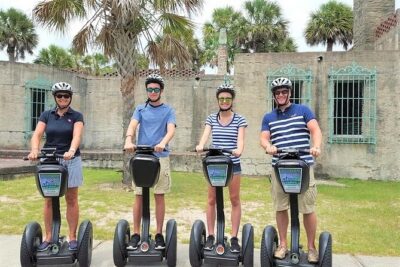
2-Hour Guided Segway Tour of Huntington Beach State Park in Myrtle Beach
Read our review →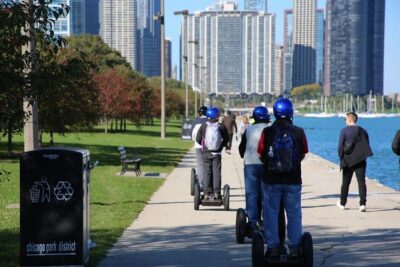
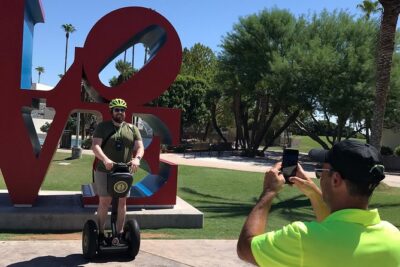
2 Hour Scottsdale Segway Tours – Ultimate Old Town Exploration
Read our review →
Browse the lists this tour appears in