
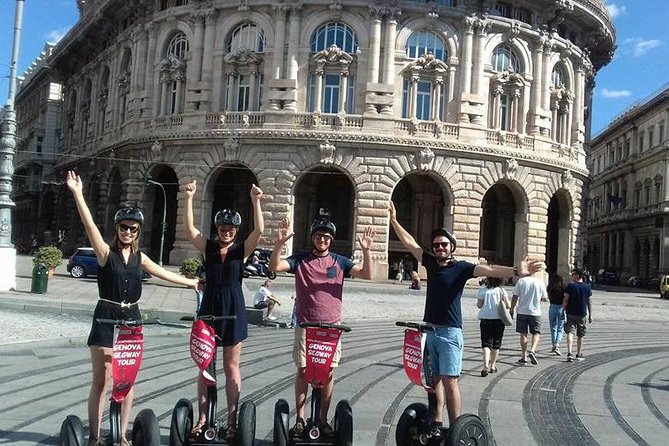
REVIEW · ITALY
Segway Tour Caruggi – 1 ora
Genoa’s caruggi, the narrow lanes of its old center, can feel like a maze on foot. This one-hour Segway ride gives you a quick route through that maze, from Porto Antico and Palazzo San Giorgio to the cathedral, Palazzo Ducale, the Palazzi dei Rolli, and the waterfront. I like the early practice session in the pedestrian harbor area, and I like that a group of no more than nine keeps the guide close. The catch is simple: one hour is enough for an introduction, not a full visit.
I also like the practical help built into the outing. Guides such as Matt have taken time to coach first-time riders, explain Genoese history, lend raincoats in wet weather, and adjust the pace to the group. The Segway helps on Genoa’s slopes, but you still need moderate physical fitness and must be at least 16 years old.
Key points to know before you book
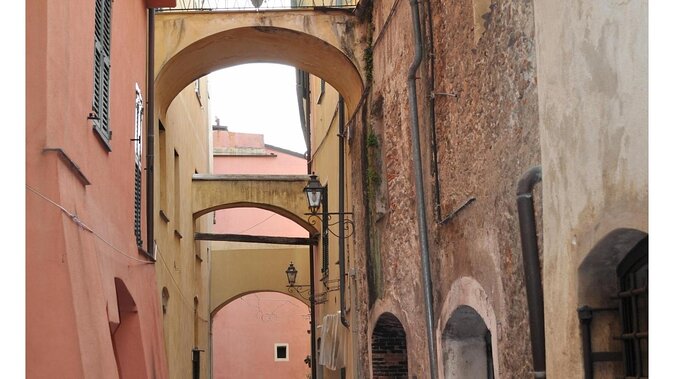
- Porto Antico is a sensible starting point: The pedestrian harbor gives you room to learn the Segway before entering tighter streets.
- You cover major sights quickly: The route links Palazzo San Giorgio, the old town, Palazzi dei Rolli, Piazza Matteotti, the cathedral, and the waterfront.
- Small groups matter here: With a maximum of nine people, your guide can give more attention to safety, questions, and riding confidence.
- Matt receives especially strong praise: He is described as patient with beginners, fluent in English, careful about safety, and good at bringing Genoa’s past to life.
- The one-hour format is brisk: It works well for a first look or a port stop, but it will not leave much time for lingering.
- The cost is $36.04 per person: That is reasonable for a small-group city orientation, especially if walking Genoa’s hills sounds tiring.
Why a Segway makes sense in Genoa
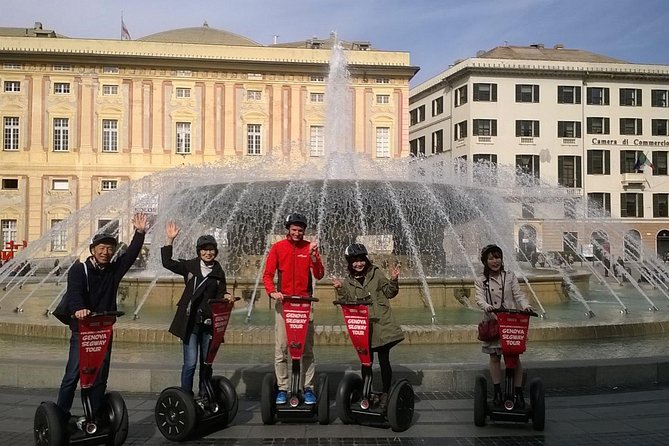
Genoa is not a flat, simple city to cross. Its old center is cut by narrow lanes, slopes, grand stairways, and sudden changes between busy streets and quiet passages. A walking tour can take you close to the sights, but a Segway lets you connect more of them in a short time.
The value here is not that the machine replaces walking. It is that you spend less time covering ground between stops. You can move from the harbor into the historic center, then reach the broad squares and waterfront without using a bus or committing to a long uphill walk.
You should not expect a fast ride through the city. The route passes through pedestrian areas and historic streets, so the pace is controlled. That is a good thing in Genoa, where you need time to watch the pavement, people, corners, and architecture.
The Segway also changes your view. From its raised platform, you can take in tall palaces and upper stories more easily than when walking with your head down. You will still stop for explanations, but the ride keeps the outing active.
A few more segway tours around Italy worth a look
- Rome Sights by Segway Tour
★ 5.0 · 1,543 reviews - Rome: Sights by Segway Tour
★ 4.9 · 536 reviews - Milan: Sights by Segway Small Group Tour
★ 4.9 · 450 reviews
Porto Antico and the first lesson
The meeting point is at Calata Cattaneo 18, in the Porto Antico area. This old harbor has become one of Genoa’s main meeting and sightseeing zones, and its pedestrian layout gives beginners a relatively calm place to get comfortable.
The opening lesson matters. Several people on the tour had never used a Segway before, and the guides took time to explain how to control it. You lean gently to move, shift your body to slow or stop, and learn how the machine responds before setting off. The exact lesson length is not given, but the route begins with this practice period.
I would arrive ready to listen rather than rush. The first few minutes can feel strange, especially if you are nervous about balance. The experience is designed for beginners, but you still need to pay attention and build confidence before entering the older streets.
Porto Antico is also useful for orientation. You are beside the sea, close to the historic center, and near public transportation. If you are visiting Genoa during a port call, the starting point is practical, though you should allow enough time to reach it from your ship.
Palazzo San Giorgio and Genoa’s trading power
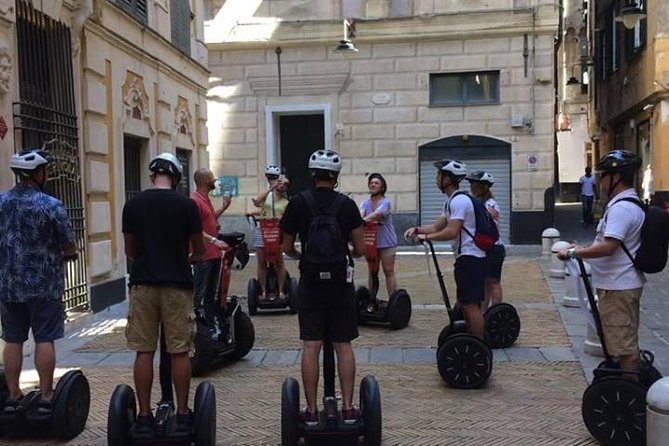
One of the first sights is Palazzo San Giorgio, a landmark with an important place in Genoa’s financial history. It is associated with the first bank in Europe, giving your guide a natural opening to explain how money, shipping, trade, and political power shaped the city.
This is a viewing stop rather than a museum visit. You will hear about the building and see it from the route, but the tour does not include an interior visit. That distinction matters if you want detailed time inside Genoa’s palaces. This experience is about seeing the city in context, not touring each building room by room.
The stop works well because it connects the modern harbor to the old commercial city. Genoa was built around the sea, and the tour keeps returning to that link.
The caruggi and the UNESCO old center
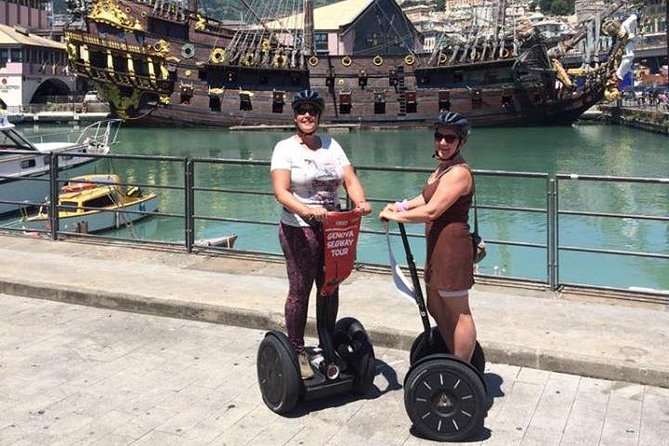
The route then enters Genoa’s historic center, a dense network of lanes known locally as the caruggi. These streets are one of the main reasons to choose a guided ride instead of simply following a standard city map.
The old center is described as the largest pedestrianized historic center in Europe. Its lanes hold centuries of urban life in a very compact space. You might pass from a modest alley into a grand square within minutes, with tall façades making the street feel narrower than it really is.
This is where a guide earns the fee. Without local direction, you can easily spend your limited time trying to work out which lane leads where. Matt and Joseph are named as guides who explain the sights while helping people manage the Segway. Their role is part traffic guide, part history teacher, and part coach.
There is a practical tradeoff. The caruggi are not open boulevards. You need to follow instructions, ride carefully, and accept a measured pace. If you want to wander into every side street, stop for photographs whenever you like, or browse small shops, a self-guided walk gives you more freedom. If you want structure and broad coverage, the Segway is more efficient.
Same city, a different route:
- Cagliari: Guided Segway Tour
★ 4.9 · 314 reviews - Genova: Segway Tour
★ 4.9 · 275 reviews - Milan Sights by Segway Small Group Tour
★ 5.0 · 249 reviews - Alberobello Guided Segway and Mini Golf Cart Tour
★ 5.0 · 221 reviews
The Palazzi dei Rolli and Genoa’s grand avenue
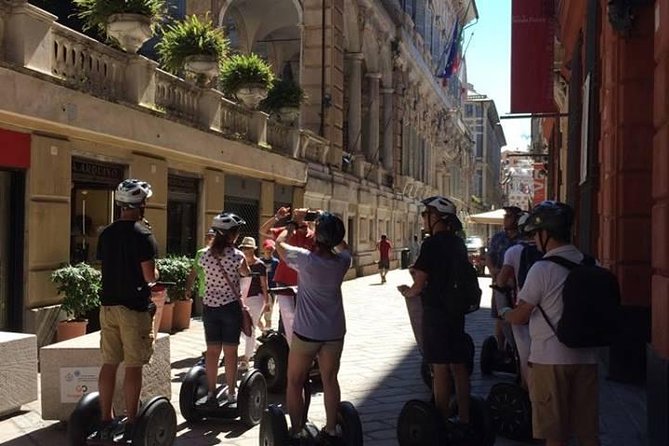
A major highlight is the UNESCO-listed Palazzi dei Rolli, a group of elegant Renaissance and Baroque palaces built along Genoa’s grandest streets. The route crosses one of the city’s most important avenues, with historic façades, decorative details, and suspended gardens creating a sharp contrast with the tight lanes below.
You will see the exteriors and learn why these palaces mattered. The tour does not promise entry to the buildings, so think of this as an architectural overview. The short format is enough to help you recognize Genoa’s aristocratic side, but not enough for a detailed study of palace interiors.
This contrast is one of the best parts of the route. Genoa is not only a port and a maze of alleys. It also has grand streets built to display wealth and power. On foot, you might focus on avoiding obstacles. On the Segway, you can look up at the buildings while moving between major sights, provided you remain alert.
Piazza De Ferrari, Via XX Settembre, and the city center
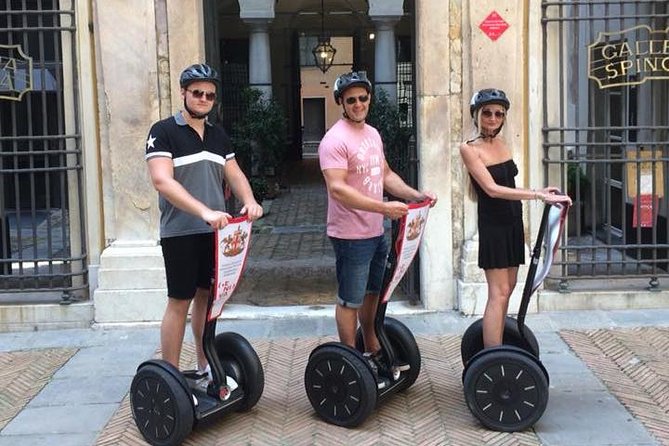
The ride continues toward the heart of Genoa, where the large square includes a prominent fountain, the Carlo Felice Theater, the Stock Exchange building, and other handsome palaces. It also brings you near Via XX Settembre, the city’s historic shopping and business street.
This section widens the picture. The caruggi show Genoa at its most compressed and intimate. Piazza De Ferrari and Via XX Settembre show a more formal city, with broad civic buildings and a strong sense of public space.
The itinerary gives you a look at these places rather than time for shopping or a theater visit. I would treat the square as a useful orientation stop. If you later return on foot, you will know where the theater, shopping street, and surrounding buildings fit into Genoa’s center.
The one-hour schedule becomes most noticeable here. There are many sights in a short stretch, and your guide has to keep moving. You can expect explanations and photo pauses, but not long breaks.
Palazzo Ducale and Genoa Cathedral
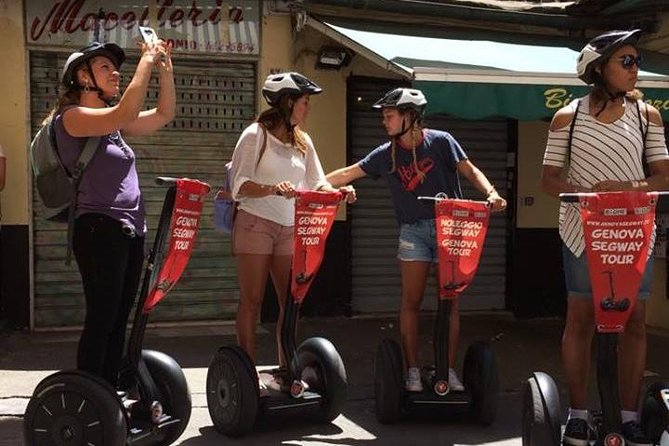
In Piazza Matteotti, the tour reaches Palazzo Ducale, the former residence of Genoa’s rulers and a former seat of civic power. Its location makes it an easy companion to the nearby cathedral, and together the two buildings show the political and religious importance of the old center.
Palazzo Ducale is best appreciated as part of the square. The building’s scale and position help explain how Genoa organized power around its central public spaces. Again, this is an exterior visit. If you want exhibitions or a long look inside, you would need to return separately.
The Cathedral of San Lorenzo brings a different mood. Its marble façade and dramatic architecture reward a slow look upward, which is difficult to do when you are rushing between appointments. The guide’s explanation gives you a reason to pause and notice the church rather than treating it as another stop on a list.
The tour cannot give every monument equal time. That is not a flaw if you use it as a first pass. I would mark the cathedral and Palazzo Ducale as places to revisit after the ride if their interiors interest you.
Back to Porto Antico and the Neptune galleon
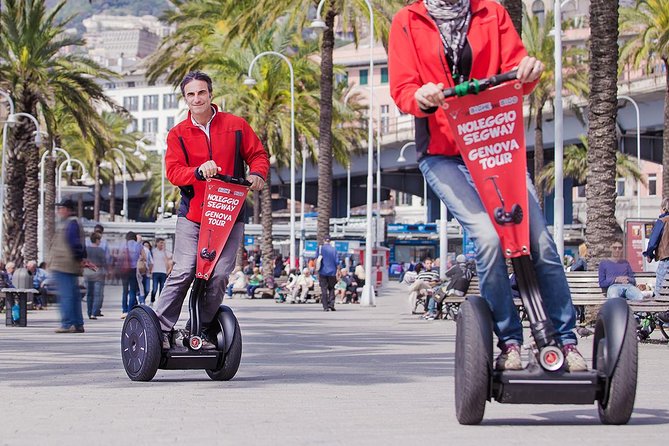
The final stretch returns to the seafront and Porto Antico. You pass modern harbor buildings and pavilions before reaching the Galeone Neptune, a large pirate-style ship famous for its role in a pirate film.
The ship adds a lighter note after the old churches and civic palaces. It is also an easy landmark for photographs. The ending brings you back to the water, where you can take in the port from a dedicated viewing area.
Returning to the meeting point makes the tour convenient. You do not need to arrange a second pickup or work out where to leave the group. It also means you can continue exploring Porto Antico afterward, although the activity itself ends at the starting point.
The guides and the small-group advantage
Guide quality is central to this experience. Matt receives repeated praise for patience, clear teaching, safety awareness, English fluency, and his ability to explain Genoese history and culture. Joseph is also described as friendly, well informed, and willing to adapt the route to what the group wants.
Those details matter more than they might on a simple walking tour. A Segway guide controls both the storytelling and the safety briefing. You want someone who can explain a building without distracting you at the wrong moment, and who can help when a first-time rider hesitates.
The group limit is nine people. That is small enough for the guide to notice problems, answer questions, and adjust the pace. It is also small enough to keep the ride from feeling like a long line of machines through the old town.
The experience does not require you to arrive as an expert rider. Several people began nervous and gained confidence during the lesson. Still, this is not a passive sightseeing vehicle. You operate the Segway, so you should be comfortable standing and paying attention for the full hour.
Price, timing, and who gets the best value
At $36.04 per person, the tour costs more than a self-guided walk and less than many private sightseeing options. I think the price is fair if you value a guide, want to cover several parts of Genoa quickly, and are curious about trying a Segway.
The strongest value comes from the combination of instruction and orientation. You are not simply renting a machine. You receive a lesson, a guided route, historical explanations, and help navigating a complicated center. For a first visit, that can save time and reduce the stress of finding the right lanes.
The one-hour length is the main limitation. One person who booked for a short port schedule wished for the longer version, and that is easy to understand. Genoa has enough sights for a much longer outing. If you have only one afternoon or want a quick introduction before exploring on your own, one hour works. If this is your main Genoa activity, look for a longer option from the same provider if available.
The tour is offered in English and is often booked about 28 days ahead. That advance demand suggests you should not leave it until the last minute if your schedule is fixed, especially during a cruise stop.
Practical details that can change your decision
You receive confirmation when booking, and the activity is near public transportation. The tour starts and ends at Calata Cattaneo 18, 16128 Genoa, in the Porto Antico area.
You must be at least 16 years old to drive the Segway. Children under 16 cannot operate one, so this is not a family option for younger children. A moderate level of physical fitness is expected, and you should be comfortable standing and controlling the machine for about an hour.
Luggage storage is available. That can help if you are moving through Genoa with bags, though you should confirm the practical arrangements when you book.
The tour depends on good weather. You can cancel for a full refund up to 24 hours before the start time. Cancellations or changes made within 24 hours are not refunded or accepted, and poor weather may lead to a different date or a full refund.
Should you book the one-hour Genoa Segway tour?
Book it if you want a lively first look at Genoa, have limited time, dislike steep walking routes, or want help finding your way through the caruggi. It is especially useful for first-time Segway riders because the guides take instruction and safety seriously.
Skip it if you want long visits inside palaces and churches, a relaxed photography walk, or a route designed for children under 16. The tour moves quickly, and the sights are mainly viewed from outside.
For most adults with a free hour, the experience offers a good balance of movement, history, and city coverage. I would choose it early in a Genoa stay, then return on foot to the cathedral, Palazzo Ducale, or the Palazzi dei Rolli that catch your eye.
FAQ
How long is the Segway tour?
The tour lasts approximately one hour.
Where does the tour start and finish?
It starts at Calata Cattaneo 18 in Genoa’s Porto Antico area and ends back at the same meeting point.
Is the tour offered in English?
Yes. The experience is offered in English.
How many people can join the tour?
The group has a maximum of nine participants.
Can children under 16 drive the Segway?
No. Children under 16 cannot drive a Segway on this activity.
What happens if the weather is poor?
The experience requires good weather. If it is canceled because of poor weather, you can receive a different date or a full refund.
Just added around Italy
- CSTRents – Verona Segway PT Authorized Tour★ 4.0 · 24 reviews
- CSTRents – Palermo Segway PT Authorized Tour★ 3.5 · 12 reviews
- Taormina Shore Excursion: City Segway Tour★ 4.5 · 3 reviews
- CSTRents – Syracuse Segway PT Authorized Tour★ 4.5 · 8 reviews
- CSTRents – Cefalù Segway PT Authorized Tour★ 3.0 · 6 reviews
- Palermo Shore Excursion: City Segway Tour★ 4.0 · 5 reviews
- Hills of Ancient Rome Segway Tour★ 5.0 · 28 reviews
- Rome Private Segway Tour★ 5.0 · 15 reviews
Italy Segway Tours, compared.

Alberobello Guided Segway and Mini Golf Cart Tour
Read our review →
Browse the lists this tour appears in