
REVIEW · MUNICH
Munich Segway Tour
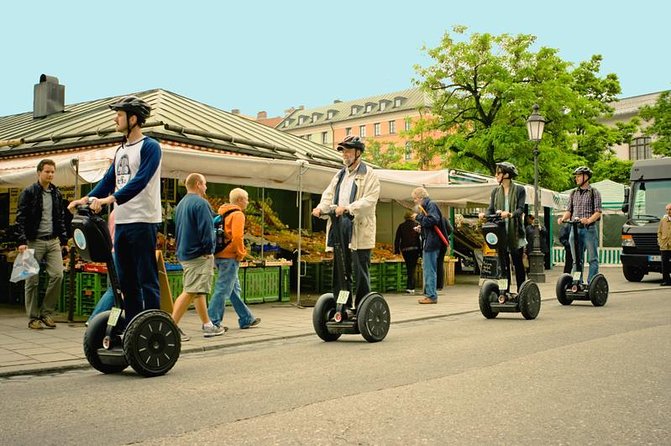
Munich’s best feature for a Segway tour is its spread: grand royal buildings, leafy parks, lively neighborhoods, museums, and the Isar waterfront all sit within a rideable central area. In three to four hours, you cover far more ground than on foot while still stopping often enough to hear the stories behind the city.
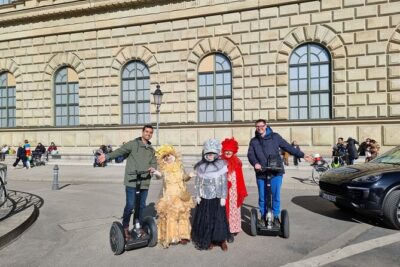
I like the eight-person group limit, which keeps the ride personal and makes it easier for a guide to help beginners. I also like the 30-minute practice session, plus the mix of major sights and local touches, from the former royal residence to surfers in the English Garden.
The main caution is practical: this is not a flat, effortless roll through town. You may ride uphill and downhill, and one rider reported a serious fall on a descent. If you have knee or balance problems, or feel unsure on moving equipment, choose a walking tour instead.
Key points to know before you book

- A 30-minute lesson comes first: You get a helmet, instruction, and time to learn the controls before setting off.
- The group never exceeds eight people: That is a useful size for city riding and personal help.
- The route covers classic and contemporary Munich: Expect Hofgarten, the Residenz, Viktualienmarkt, the English Garden, the Isar, and more.
- Guides shape the experience: Karl, Mark, Rob, Susanna, and Mike are praised in the supplied feedback for clear teaching, history, and friendly leadership.
- The tour offers strong sightseeing value: At $90.05 per person, you pay more than for a self-guided walk, but you see a large part of central Munich in one half-day.
- You need basic physical confidence: Riders must be at least 14, weigh between about 100 and 250 pounds, and manage stair-like movements without help.
Why a Segway works well in Munich
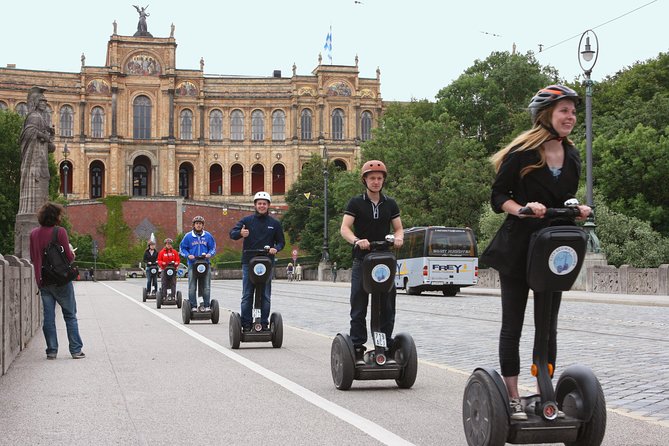
Munich is easy to explore on foot, but its attractions are spread across several districts and open spaces. A Segway gives you a quicker link between them. You can move from the old city to a garden, from a market to the river, and from grand architecture to a neighborhood café area without spending much of the tour waiting for transport.
The electric vehicle also gives the tour a playful edge. You are not simply being led from one photo stop to the next. You are learning a new way to move, which can make the city feel more immediate. Several guides are praised for making first-time riders comfortable, and that matters because many people arrive with no Segway experience at all.
The best way to think about this outing is as a broad introduction to Munich. It does not give you long interior visits at every museum or palace. Instead, it helps you understand how the city fits together, points out places worth returning to, and gives you a useful first look before spending another day on foot.
A few more segway tours around Munich worth a look
- Munich: City Highlights Guided Segway Tour
★ 4.6 · 266 reviews - Munich 3-Hour Segway Tour: Nazi Munich & Royal Architecture
★ 4.9 · 194 reviews - Munich: City Highlights Guided Segway Tour
★ 4.5 · 161 reviews
Meeting near Karlsplatz and learning the controls
The published meeting point is Karlsplatz 4, 80335 München, near the central station area. The tour begins in the morning and returns to the same meeting point by mid-afternoon. Since the activity lasts about three to four hours, leave room in your day for the ride and the return journey.
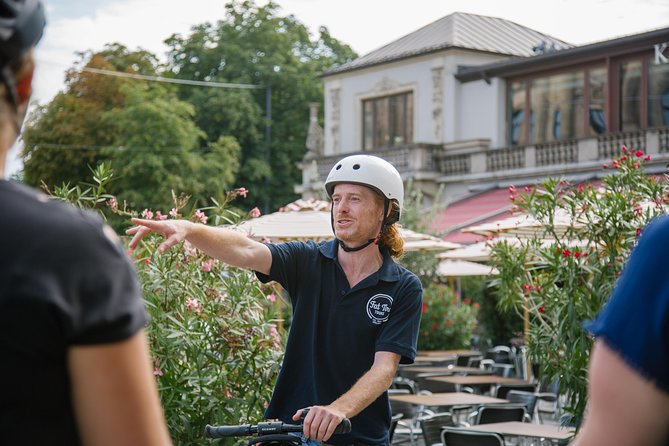
Your first serious task is the 30-minute Segway orientation. The guide explains how to start, stop, turn, and control your speed, then gives you time to practice. This is not a box-checking safety talk. It is the part of the tour that determines how relaxed you will feel later.
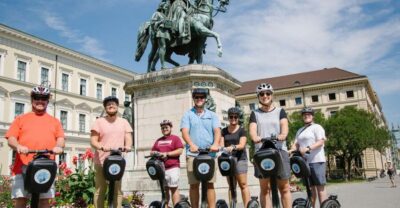
The instruction has earned particular praise from people riding for the first time. Mark is described as patient with beginners, while Rob is praised for careful coaching and navigation. Karl is also singled out for clear explanations and calm help. Those details are worth noting because a good teacher can make the difference between enjoying the ride and spending the whole morning tense.
You receive a helmet, and wet-weather ponchos are available if rain arrives. Still, the activity requires decent weather, so a poor forecast can lead to a new date or a refund. Wear shoes and clothing that let you bend, step, and balance comfortably. You do not need to be athletic, but you do need to control the machine and react to changes in the route.
Hofgarten and the royal side of Munich
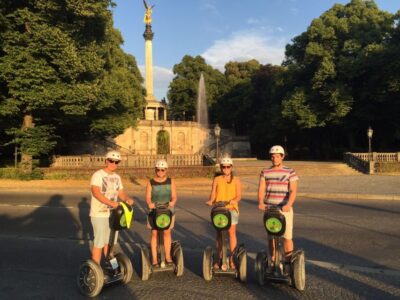
Once everyone is ready, the ride moves into Munich’s old center and toward Hofgarten, the Royal Gardens. This formal green space offers a welcome change from city streets and provides a setting for stories about Munich’s rulers and public life.
Hofgarten is especially useful early in the tour because it gives you time to settle into the Segway while looking at one of the city’s most recognizable planned spaces. You are likely to stop here for pictures and a talk rather than simply pass through.
The nearby Residenz, the former royal residence, adds weight to this part of the route. The tour gives you an exterior look and historical context, but it is not a palace interior visit. If you want the full art collections, rooms, and treasury, plan a separate admission later.
That split is worth understanding before booking. The Segway tour is good at showing you where Munich’s major sights are and explaining their place in the city. It is not designed for long, detailed visits inside each one.
Ludwig-Maximilians-Universität and Munich’s past
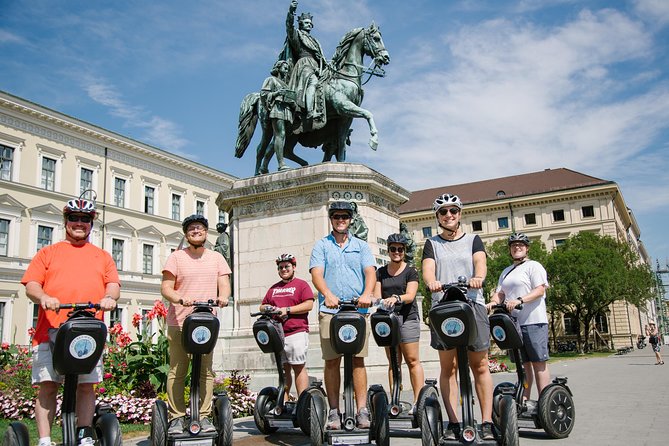
The ride passes Ludwig-Maximilians-Universität, one of the city’s major university landmarks. Here, the guide connects Munich’s grand center with its role as a modern university city.
The history talk is one of the strongest parts of the outing. Guides such as Susanna, Mike, Mark, Karl, and Rob are praised for giving more than quick labels. Expect information about Munich’s early beginnings, its beer traditions, the Nazi period, and World War II, along with details about present-day city life.
The amount of historical detail will depend on the guide and the pace of the group. Rob is praised for discussing the Nazi era and World War II in depth, while Karl is noted for explaining Munich from a local point of view, including everyday subjects such as ice cream and city habits. That range keeps the tour from feeling like a string of dates and names.
You should still see this as an introduction, not a full historical seminar. Munich has difficult and important stories that deserve more time than a moving city tour can give. The advantage here is that the guide can place those stories in the streets and buildings around you.
Same city, a different route:
- Munich’s Highlights 3-hour Segway Tour
★ 5.0 · 76 reviews - Munich Classic City Segway Tour (English or German Guide)
★ 5.0 · 65 reviews - Munich: Third Reich and World War II Segway Tour of the City
★ 4.1 · 44 reviews - Munich: Beer Stories Guided Segway Tour
★ 4.5 · 31 reviews
English Garden and the famous river surfers
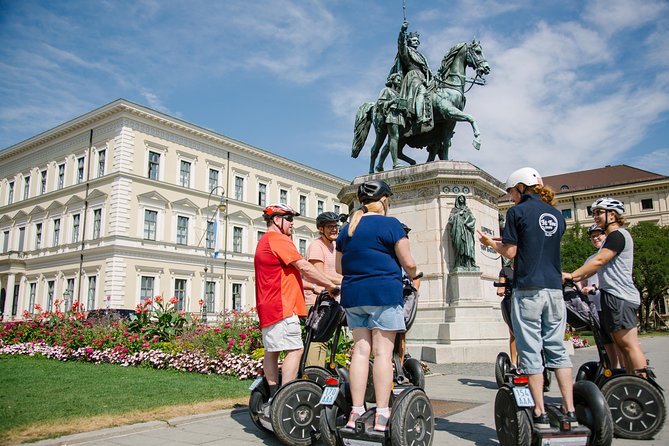
The English Garden is one of the route’s most memorable stops. This large urban park gives you open space, trees, paths, and a break from dense central streets.
A particularly enjoyable detail is the chance to see surfers riding the standing wave in the park. The sight brings together Munich’s polished city image and its relaxed, slightly unexpected side. It is also one of the tour’s best photo opportunities.
Riding through a park feels different from crossing the old center. You get more room to move, although you still need to follow the guide and watch the path. Pay attention to other park users and changing surfaces. The ride is fun, but it is not a private track.
The English Garden also shows why a vehicle can be useful here. The park is large enough that walking between its well-known points takes time. A Segway lets you see more of it while saving your legs for museums, meals, and evening plans.
The Isar waterfront and Deutsches Museum
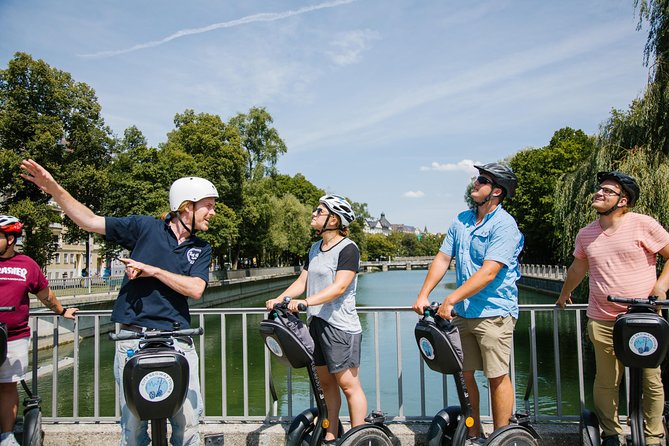
The route passes along the Isar and by the Deutsches Museum. The riverfront gives you another view of Munich, one that is less formal than the royal center and more tied to outdoor life.
You will not have a full museum visit during the tour. The Deutsches Museum is a major attraction in its own right, so treat this pass-by as a useful preview. If science and technology interest you, note its location and return with several hours to spare.
The Isar section also breaks up the architecture-heavy parts of the route. You see how Munich’s public spaces connect with the water, and the guide can explain the city beyond its postcard center. The combination of river, park, and museum makes the route feel varied rather than repetitive.
A possible drawback is the need to keep moving. You may want more time by the water or inside the museum, but the half-day format has to keep the group on schedule. Think of this part as orientation and atmosphere, not a complete visit.
Gartnerplatz and the city’s modern character
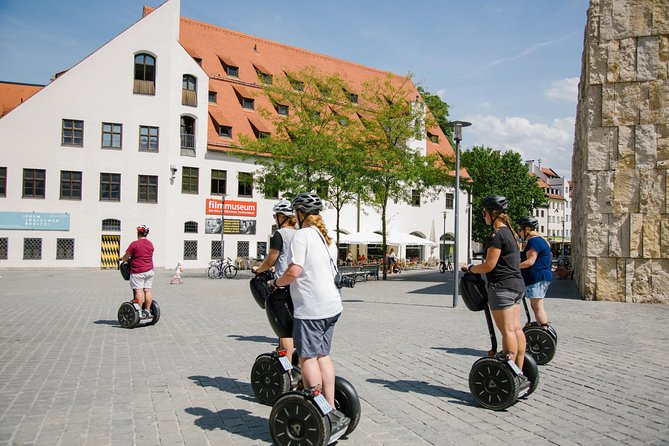
The ride through the Gartnerplatz neighborhood shows a different side of Munich. This area helps balance the royal buildings and formal gardens with a more current, lived-in part of the city.
The value of this stop is contrast. Munich is not only grand squares, old residences, and beer traditions. It also has neighborhoods where people eat, shop, meet friends, and spend ordinary days. Moving through these streets lets you see the city as more than a collection of monuments.
The exact route can vary. One person noted that the map shown in the app did not match the path taken, which is a useful warning if you expect every turn to follow a fixed digital outline. The guide may adjust the route for conditions, group ability, or the best flow of the day.
That flexibility can be helpful, but you should book this for the guide-led experience rather than a guaranteed GPS track. The overall sights are clear, while the precise order and streets may change.
Viktualienmarkt, Jewish Museum, and the final return
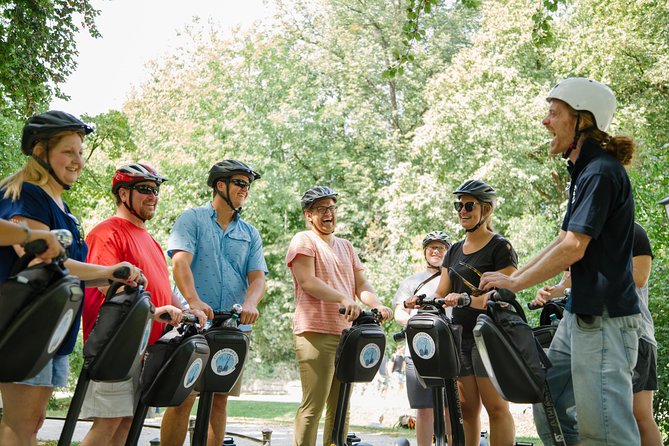
Viktualienmarkt brings the tour back into the center and gives you a taste of Munich’s food culture. The market is a natural place for a snack break, but food and drinks are not included in the tour price. Bring money or a payment method if you want something to eat.
The market is valuable even if you do not stop for a full meal. It is a practical place to return later for browsing and local food, and its location makes it easy to combine with other old-city sights after the tour.
The route also passes the Jewish Museum. This is an important reminder that Munich’s story includes Jewish life, persecution, and the long work of remembrance, not only royal ceremonies and beer. The tour may provide context as you pass, but you will need a separate visit for the museum’s exhibitions and fuller treatment.
After the central stops, the tour returns to the meeting point. Because the route includes many different parts of Munich, the final impression is broad rather than narrowly focused. You finish knowing which places deserve more of your time.
How much value do you get for $90.05?
At $90.05 per person, this is a premium sightseeing activity. A walking tour usually costs less, and independent visits can be cheaper if you already know where you want to go. The Segway adds value through speed, equipment, instruction, and a guide who handles the route.
The eight-person limit is important here. You are not paying for a large coach experience. A small group lets the guide adjust the pace, answer questions, and watch first-time riders more closely. The included helmet, orientation, and rain poncho also remove a few practical concerns.
The strongest value comes if you have only a short stay in Munich. In one half-day, you can see the old center, Hofgarten, the Residenz area, the English Garden, the Isar, Gartnerplatz, Viktualienmarkt, the Jewish Museum, and the Deutsches Museum from the outside. That is a lot of orientation for one booking.
The value drops if you dislike motorized tours, want long interior visits, or already know Munich well. You are paying for movement and overview, not extended time at one attraction.
Who should book this Munich Segway tour?
This outing suits adults and older teenagers who want a lively introduction to Munich and feel comfortable learning a new device. The minimum age is 14, and the maximum group size keeps the experience manageable for families, couples, and small parties.
It is also a strong choice for people who want history without spending the whole day inside museums. The guides are repeatedly praised for combining instruction with stories, and the best feedback highlights their patience, humor, and ability to adapt the ride to the group.
You should think twice if you have knee or balance problems. The ride requires movements similar to climbing and descending stairs, and the route includes hills. Riders must weigh between about 100 and 250 pounds, or roughly 45 to 110 kilograms.
The safety concern is not theoretical. One participant needed an ambulance after falling downhill and noted that other incidents had occurred. That does not mean every ride is unsafe, but it does mean you should take the training seriously, control your speed, and tell the guide if you are uncomfortable.
Practical booking advice and cancellation terms
The tour is rated 4.9 from 181 reviews, with 98 percent recommending it. The most praised elements are the guides, the beginner instruction, the amount of Munich covered, and the balance between historical explanation and enjoyable riding.
Book at least a day ahead if possible. You can cancel for a full refund up to 24 hours before the start time. Changes or cancellations inside that window are not accepted for a refund. If bad weather or too few bookings causes the operator to cancel, you can choose another date or receive a full refund.
Confirmation is normally sent at booking. If you book within seven days of the date, confirmation may arrive within 48 hours and depends on availability. The tour is near public transportation, and it starts and ends at the same meeting point.
Should you book it?
Book this Munich Segway tour if you want to see a wide slice of the city in one morning, like the idea of a small group, and are willing to learn the machine properly. The combination of Hofgarten, the English Garden, Viktualienmarkt, the Isar, royal sights, and local neighborhoods gives you a useful first map of Munich.
Choose a walking tour instead if you want long museum visits, dislike balance equipment, or have knee and stability concerns. For everyone else, $90.05 is reasonable when you value time, local guidance, and the chance to cover Munich’s scattered highlights without tiring yourself out on foot.
FAQ
Where does the Munich Segway tour start?
The tour starts at Karlsplatz 4, 80335 München, Germany, near Munich’s central station area. It ends back at the same meeting point.
How long does the tour last?
The activity lasts approximately three to four hours. It begins in the morning and returns by mid-afternoon.
Is Segway training included?
Yes. The tour includes a 30-minute orientation session covering the basics of riding and controlling the Segway. A helmet is also included.
How many people can join the tour?
The maximum group size is eight people. This small format allows the guide to give more direct help during training and sightseeing.
What is the minimum age and weight range?
Participants must be at least 14 years old and weigh between about 100 and 250 pounds, or approximately 45 and 110 kilograms.
What happens if the weather is poor?
The experience requires good weather. If the operator cancels because of poor conditions, you can select another date or receive a full refund. You can also cancel for a full refund up to 24 hours before the start time.
Just added around Munich
- Munich Third Reich and WWII Segway Tour★ 4.5 · 20 reviews
- Munich’s Highlights 3-hour Segway Tour★ 5.0 · 76 reviews
- Munich 2-Hour Segway Tour★ 5.0 · 15 reviews
- Segway tour Munich Beer Stories (3h)★ 5.0 · 3 reviews
- 2-Hour Segway Discovery Tour Munich★ 5.0 · 20 reviews
- Segway Tour Munich Old Town 3 hours★ 4.5 · 10 reviews
- Beer Testing Segway Tour in Munich★ 3.5 · 2 reviews
- 2-Hour Segway Discovery Munich Night Tour★ 5.0 · 2 reviews
Munich Segway Tours, compared.
Munich 3-Hour Segway Tour: Nazi Munich & Royal Architecture
Read our review →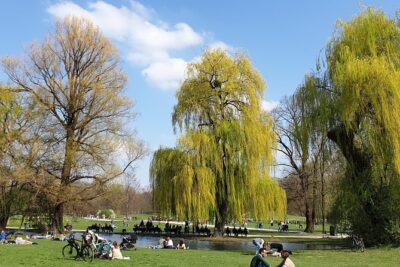

Munich Classic City Segway Tour (English or German Guide)
Read our review →
Munich: Third Reich and World War II Segway Tour of the City
Read our review →
Browse the lists this tour appears in