
REVIEW · MUNICH
Munich Third Reich and WWII Segway Tour
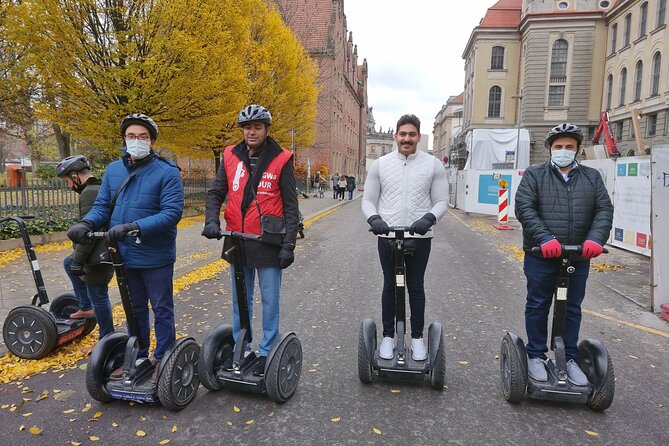
Munich’s Nazi past is spread across the city, and a Segway lets you connect those sites without spending the day on foot. In about three hours, you ride from Königsplatz and the Führerbau to the Hofbräuhaus, Odeonsplatz, the White Rose memorial, and other places tied to Hitler’s rise and the resistance against him.
I like the way this tour combines political history with a broad city ride. I also like the extra reach: you can see more of central Munich in one morning than on a standard walking tour, and guides such as Karl, Josef, Claudia, and Rawen are praised for patience, clear explanations, and help with photos. The main caution is practical: a Segway can feel cold in spring or winter, and crowded streets may make the ride less smooth.
Key points to know
- Three hours on a Segway: You cover a long list of Munich sights without the same walking load.
- A focused Nazi-era route: See the Führerbau, Braunes Haus site, Königsplatz, Hitler’s former apartments, and places linked to the White Rose.
- Instruction before departure: First-time riders receive time to get used to the machine.
- English guidance: The tour is offered in English, with guides including Karl, Josef, Claudia, and Rawen.
- Small-to-medium group size: The maximum is 20 people, though the experience may feel less personal at the upper limit.
- Dress for the ride: Cool weather feels colder on a moving Segway, so bring a warm layer.
Why a Segway works for Munich’s difficult history
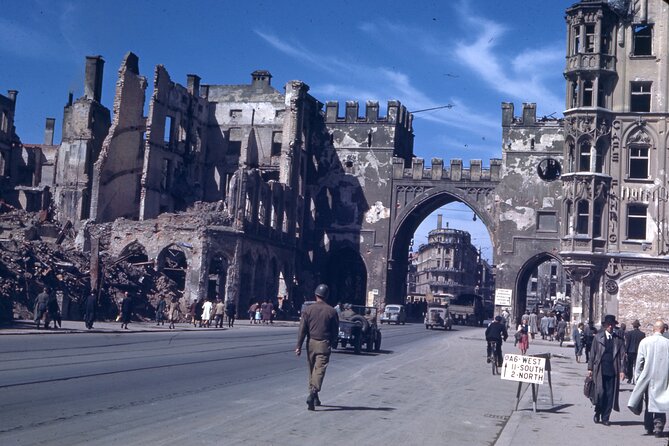
This is not simply a sightseeing ride with a few historical labels attached. Its subject is the rise of Adolf Hitler in Munich, the failed Beer Hall Putsch, Nazi plans to remake the city, and the people who opposed the regime.
That story works best when you see the places in relation to one another. Munich’s old center, grand ceremonial squares, government buildings, beer halls, and museums all sit within a rideable area, but they are not arranged like a neat museum exhibit. A guide helps connect the dots.
I see the Segway as a useful compromise. You move faster than a walking group, yet you are still out in the streets and stopping at real locations. You get a sense of how the city is laid out instead of moving from one isolated indoor display to another.
The format also suits a three-hour visit. If Munich is one stop on a longer Germany trip, you can use this tour to get an overview early in your stay. It gives you names and places to return to later, including the Residenz, Hofbräuhaus, Haus der Kunst, and Odeonsplatz.
A few more segway tours around Munich worth a look
- Munich: City Highlights Guided Segway Tour
★ 4.6 · 266 reviews - Munich 3-Hour Segway Tour: Nazi Munich & Royal Architecture
★ 4.9 · 194 reviews - Munich Segway Tour
★ 5.0 · 181 reviews
Starting at Artur-Kutscher-Platz at 10:00
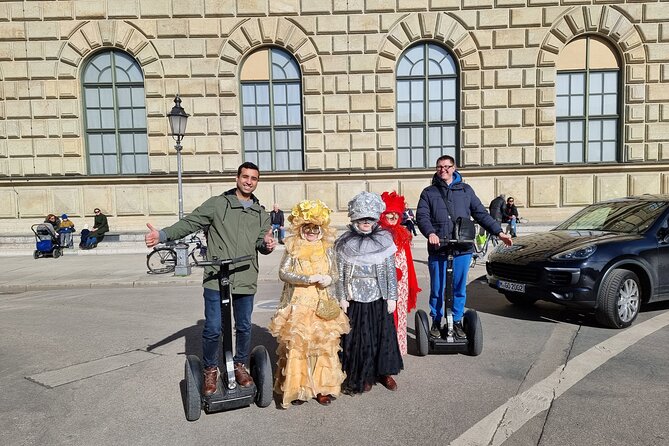
The tour begins at Artur-Kutscher-Platz 2A, in the 80802 Munich area, at 10:00 in the morning. It ends back at the same meeting point, which makes the start and finish easy to plan around.
You receive confirmation when you book, and the meeting point is near public transportation. The group can include up to 20 people. That is not a tiny private outing, but it is still a manageable number for a moving city tour.
The first minutes matter. If you have never used a Segway, you need time to learn how it responds to your weight and movements. That learning period is part of the experience, not wasted time. Several riders found the machines easy to handle after instruction, including people trying one for the first time.
I would arrive ready to focus on the safety briefing rather than rushing in at 10:00. Comfortable shoes help, but the larger issue is clothing. Even on a day that feels mild while standing still, three hours of moving air can make Munich feel sharply cold.
Königsplatz and the architecture of power
Königsplatz is one of the most important stops because it shows how public space can be used for political theater. Its grand scale and classical appearance made it useful to the Nazi movement, which used the area for ceremonies and demonstrations.
Here, the guide can explain Hitler’s Munich years in a setting that makes the obsession with monumental architecture easier to understand. The story is not only about a person gaining power. It is also about how streets, squares, buildings, crowds, and symbols were used to project authority.
The riding format helps you take in the proportions of the square. On foot, you may focus on one building or cross quickly to the next stop. From a Segway, you can pause, listen, and then move on without a long trek between each point.
Königsplatz also gives you a clear introduction to the difference between modern Munich and the image Nazi leaders wanted to impose. Your guide can place the surviving buildings and changed public uses in context, which is one reason the quality of the guide matters so much here.
The Führerbau and the Braunes Haus site
The Führerbau was built as a major Nazi administrative and representative building. It is tied to the regime’s public image and to the way Munich was presented as a central city for the movement.
The nearby Braunes Haus was the national headquarters of the Nazi Party. Even when a building is gone or its function has changed, knowing what stood there can alter the way you read the surrounding streets. You are not just looking at attractive central Munich. You are standing in an area where party organization and propaganda once operated.
These stops are valuable for anyone who wants more than battlefield history. The tour deals with the machinery of power, not only the later war years. You hear how political organization took root, how Hitler built a base in Bavaria, and how Munich was meant to serve as the movement’s capital.
Do not expect every stop to provide a dramatic surviving structure. Some value comes from the explanation of what happened at a site. If you prefer preserved interiors and large museum displays, this outdoor tour will feel less complete on its own. It works best as a citywide introduction.
Same city, a different route:
- Munich: City Highlights Guided Segway Tour
★ 4.5 · 161 reviews - Munich’s Highlights 3-hour Segway Tour
★ 5.0 · 76 reviews - Munich Classic City Segway Tour (English or German Guide)
★ 5.0 · 65 reviews - Munich: Third Reich and World War II Segway Tour of the City
★ 4.1 · 44 reviews
From the Schelling-Salon to the White Rose
The Schelling-Salon adds a more personal and social side to the story. Places where political ideas were debated, friendships formed, and movements gathered can tell you as much as official buildings, though they require a good explanation to become meaningful.
The White Rose stop shifts attention to resistance. The group is associated with Munich students who opposed the Nazi regime and distributed anti-Nazi leaflets. This part of the route matters because it prevents the tour from treating Munich only as the birthplace and showcase of Nazi power.
I value that contrast. You see the institutions that helped Hitler rise, then learn about people who rejected the regime at great personal cost. The shift also gives the history a human scale. Instead of hearing only about leaders and buildings, you encounter moral choices made by ordinary people living under dictatorship.
The itinerary names the White Rose stop as IWhite Rose, but the subject is the White Rose resistance movement. If this is the part of the tour that interests you most, ask your guide questions. The guides are reported to allow time for questions and photographs, and that makes a difference at stops where the story is more important than the physical remains.
Haus der Kunst and Hitler’s Munich plans
Haus der Kunst represents the cultural side of Nazi rule. The regime did not limit itself to politics and policing. It also tried to control art, public taste, and the image Germany presented to itself.
At this stop, you can expect an explanation of how art was used to promote Nazi ideals and reject work the regime considered unacceptable. The building’s scale and formal design fit the larger plan to make Munich a showcase for the movement.
The tour also discusses Hitler’s plans to rebuild Munich. This is one of its more interesting threads because it helps you imagine the city that was intended, not just the city that exists. Grand avenues and monumental structures were part of a political vision. The plan reveals how architecture could be used to make power appear permanent.
You should keep your expectations realistic. A three-hour outdoor ride cannot provide a full art history lesson or an extensive museum visit. It can, however, show you how the city’s cultural buildings fit into a wider political program.
The Angel of Peace and Hitler’s former apartments
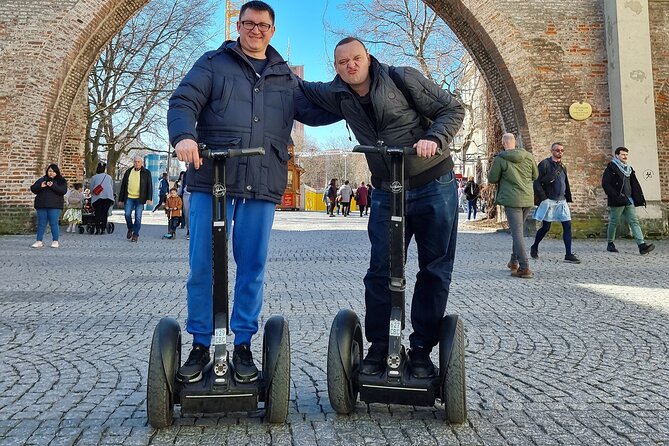
The Angel of Peace provides a change of mood and a chance to connect Munich’s public monuments with the city’s earlier identity. The route also passes the locations of Hitler’s Munich apartments, including the apartment associated with 1933 and the one connected with his 1920 to 1929 period.
These addresses help trace his rise from political newcomer to national leader. The tour begins with the story of the young Austrian who arrived in Munich in 1912 after the collapse of his first ambition. From there, the route follows his political development and growing influence.
There may not be a dramatic attraction at every former address. That is normal for a city history tour. The importance lies in seeing how close these places are to the cafés, squares, residences, and public buildings of central Munich.
This part can also feel more intimate than the grand squares. You are looking at the ordinary urban setting in which an extremist movement gained strength. That contrast is useful, but it depends on your guide providing dates and context rather than simply pointing at a location.
Hofbräukeller, Hofbräuhaus, and the Beer Hall Putsch
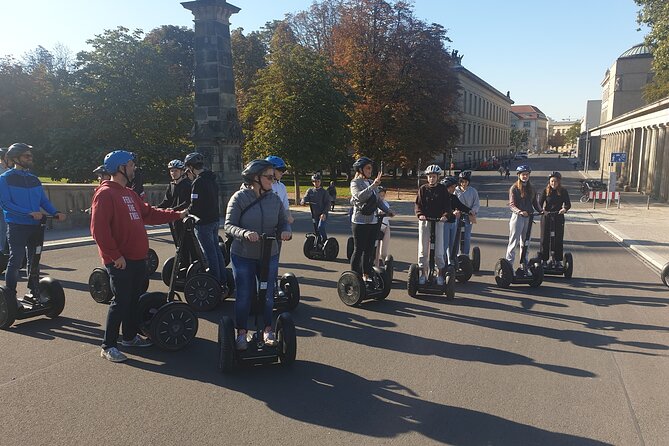
Beer halls are central to Munich’s public identity, and this tour uses them to explain political organizing. The route includes Hofbräukeller and Hofbräuhaus, two names that help frame the role of beer halls in Bavarian social and political life.
The Beer Hall Putsch was Hitler’s failed attempt to seize power in Munich in 1923. The guide explains why it did not succeed and how the event affected Hitler’s later strategy. That makes this stop more than a quick photo opportunity.
Hofbräuhaus is also one of Munich’s busiest sights. You may pass through crowded areas, especially in the shopping and central old-town districts. One rider felt the route spent too much time in crowded shopping streets instead of focusing on WWII sites. That is a fair caution: the tour is historical, but it is also a general city ride through the center.
If your main goal is military history, you may want a museum visit alongside this experience. If you want to understand how Munich’s social spaces connected with political events, the beer hall stops add useful context.
Maximilianeum, Maximilianestrasse, and the old center
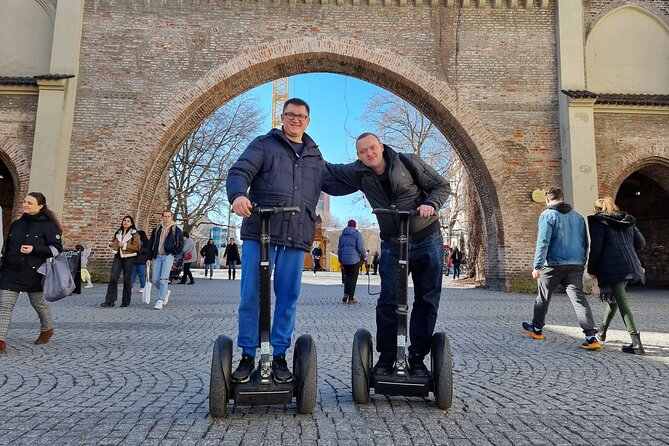
The Maximilianeum and Maximilianestrasse broaden the tour beyond Nazi history. You see Munich’s monumental civic architecture and major avenues, which helps explain the city Hitler wanted to reshape.
This section gives you a sense of the city’s scale and movement. You are not confined to a few political addresses. You ride through central Munich, linking official buildings, historic streets, and public spaces.
The route continues toward the Residenz München and Odeonsplatz. The Residenz introduces the long history of Bavarian rulers and court life, while Odeonsplatz returns the focus to Nazi-era events and the Beer Hall Putsch.
That mixture is a strength when you want Bavarian history as well as the Third Reich. It is a weakness if you expect every minute to focus on WWII. The tour’s subject is broader: Munich before, during, and around the Nazi period, with the city itself as the connecting thread.
Guide quality matters more than the machine
A Segway is fun, but the guide determines how much you take away. The strongest guide experiences here involve patient instruction, clear storytelling, time for questions, and flexibility when a group has already seen some of Munich.
Karl is praised for answering questions, taking photos, and making first-time riders feel comfortable. Josef is noted for a strong family experience, while Claudia handled a tour during a staffing problem. Rawen is described as adapting the route to the group’s interests and helping a new rider feel safe.
Those details are useful because the subject can become dry if presented as a list of dates. A guide who explains why a place matters, then lets you look around, will make the ride far more worthwhile.
The group size can reach 20, so personal attention is not guaranteed at every stop. Still, the shared format can work well for couples, families, and people who want a social morning rather than a private lecture.
Price, pace, and practical value
At $82.82 per person, this is not the cheapest way to see Munich. You are paying for the vehicle, instruction, a three-hour route, and a guide who covers a substantial part of the city.
I think the value is strongest if you want to see more than you could comfortably cover on foot. It is also a good fit if you enjoy learning through places rather than sitting indoors. For a family with teenagers, the Segway adds an activity element that can keep the history from feeling like a long lecture. Young riders aged 17 and 14 had a particularly good time on the tour.
The value is weaker if you already know central Munich well, dislike group activities, or want a detailed museum-level account of WWII. You may find the outdoor commentary too brief at some stops, and busy streets can reduce the calm pace you might hope for.
The tour is recommended by 90 percent of its audience and has a 4.7 rating from 20 reviews. That is a strong result, though the sample is small enough that you should still consider the practical cautions about weather, crowds, and equipment.
Free cancellation is available up to 24 hours before the 10:00 start time for a full refund. Cancellations or changes inside that window are not refunded or accepted. The operator also requires a minimum number of participants, so a cancellation for that reason leads to another date or experience, or a full refund.
Who should book this Munich ride?
I would choose this tour if you want a lively introduction to Munich’s Nazi-era sites, prefer moving around to walking slowly, and can handle a little city traffic. It is especially suited to couples and families with older children or teenagers who want history plus an activity.
I would be more cautious if you have balance concerns, are uncomfortable on small personal vehicles, or need a quiet, highly detailed historical lecture. One rider reported a Segway failure and a fall, although no serious injury was reported. That appears to be an isolated warning rather than the main pattern, but it is still worth keeping in mind.
Book it early if your schedule is fixed. The experience is booked about 36 days ahead on average, and the maximum group size is 20. Bring warm clothing, arrive ready for instruction, and keep your expectations clear: this is a guided city ride with serious history, not a dedicated museum tour.
If that balance sounds right, the Segway format gives you a fast, memorable way to connect Munich’s political past with its present-day streets. If you want the fullest WWII treatment, pair it with a museum or memorial visit later.
FAQ
Where does the Munich Third Reich and WWII Segway Tour start?
It starts at Artur-Kutscher-Platz 2A, 80802 Munich, Germany.
What time does the tour begin?
The scheduled start time is 10:00 am.
Where does the tour finish?
The tour ends back at the starting meeting point.
How long does the experience last?
The tour lasts approximately three hours.
Is the tour offered in English?
Yes. English is the listed tour language.
What is the maximum group size?
The experience allows a maximum of 20 participants.
Does the tour include admission tickets?
The listed itinerary shows free admission for the stops.
Which historic places are included?
The route includes Königsplatz, the Führerbau, the Braunes Haus site, the White Rose, Haus der Kunst, Hofbräuhaus, the Residenz, Odeonsplatz, Hitler’s former apartments, Hofbräukeller, the Angel of Peace, Maximilianeum, and other central Munich locations.
Is the tour suitable for first-time Segway riders?
Yes. Riders are given time to learn the Segway, and most participants can take part. Previous experience is not stated as a requirement.
Can I cancel for a full refund?
Yes, if you cancel at least 24 hours before the experience start time. Cancellations or changes made less than 24 hours before the start are not refunded.
Just added around Munich
- Munich’s Highlights 3-hour Segway Tour★ 5.0 · 76 reviews
- Munich 2-Hour Segway Tour★ 5.0 · 15 reviews
- Segway tour Munich Beer Stories (3h)★ 5.0 · 3 reviews
- 2-Hour Segway Discovery Tour Munich★ 5.0 · 20 reviews
- Segway Tour Munich Old Town 3 hours★ 4.5 · 10 reviews
- Beer Testing Segway Tour in Munich★ 3.5 · 2 reviews
- 2-Hour Segway Discovery Munich Night Tour★ 5.0 · 2 reviews
- Munich Classic City Segway Tour (English or German Guide)★ 5.0 · 65 reviews
Munich Segway Tours, compared.
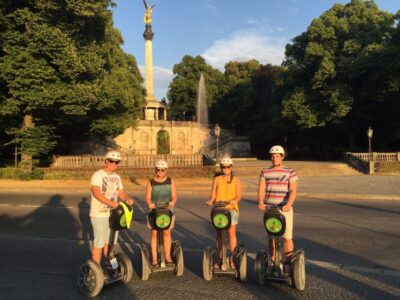
Munich 3-Hour Segway Tour: Nazi Munich & Royal Architecture
Read our review →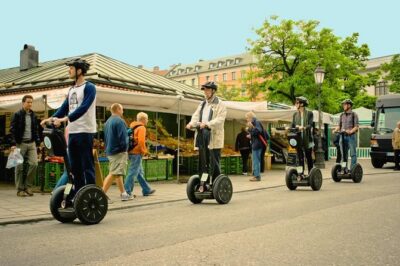

Munich Classic City Segway Tour (English or German Guide)
Read our review →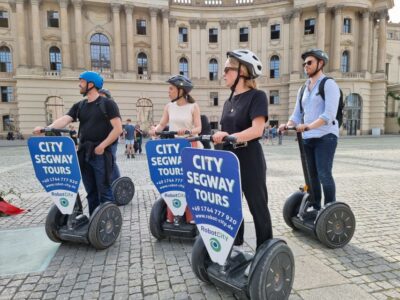
Munich: Third Reich and World War II Segway Tour of the City
Read our review →
Browse the lists this tour appears in